The research, based on the collection of seabed samples and their analysis using advanced genetic techniques, has detected a decline of approximately 40% in species diversity in Spain’s two marine national parks: the Cabrera Archipelago National Park (Balearic Islands, Mediterranean Sea) and the Atlantic Islands National Park (Galicia, Atlantic Ocean). The data, collected over almost a decade, show that even marine protected areas are not immune to the loss of biodiversity.
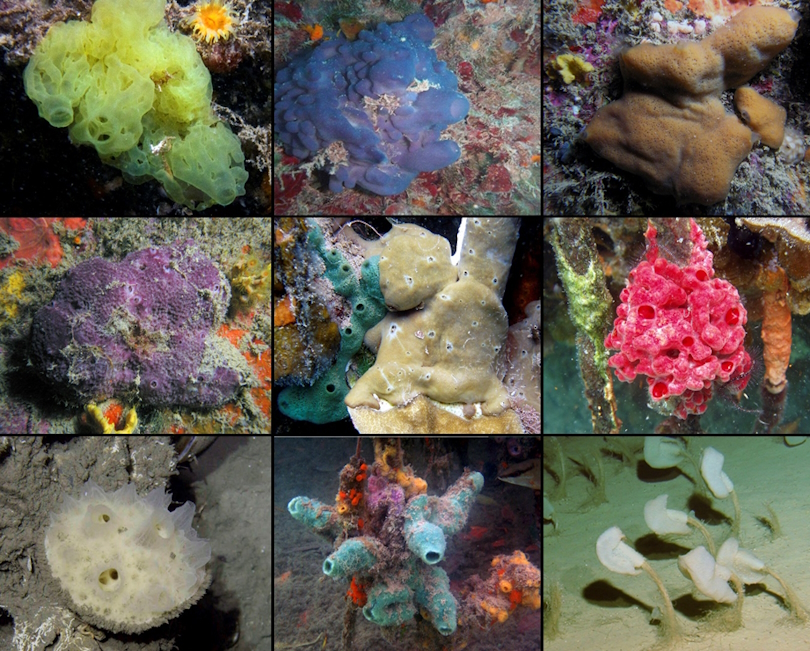
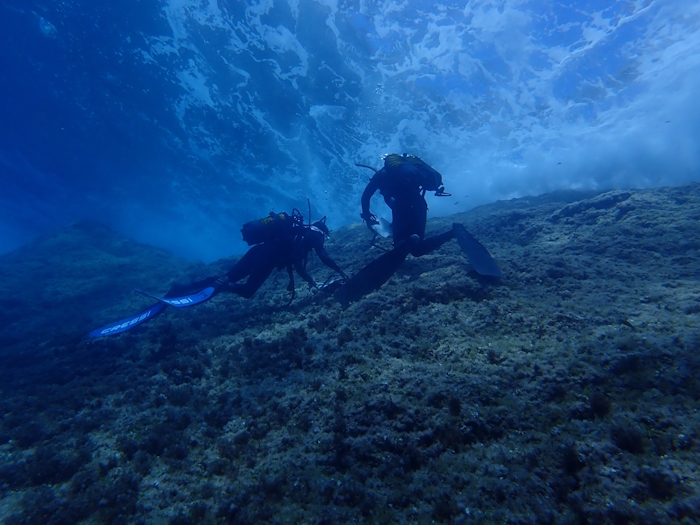
The study, carried out by researchers from the Centre for Advanced Studies of Blanes (CEAB-CSIC) and the University of Barcelona (UB), has been published in Diversity and Distributions. It is based on repeated sampling of the same seabed habitats, ranging from shallow, well-lit areas dominated by algae and other photosynthetic organisms, to deeper communities with less light and a greater presence of sponges and other invertebrates, as well as even deeper detrital seabeds formed by sediments and calcareous algae. Sampling was repeated at the same sites between 2014 and 2022.
Once the samples had been collected, the research team analysed them in the laboratory using advanced genetic techniques. They extracted the DNA present and amplified marker genes. By comparing the fragments that act as a “genetic fingerprint” with information from major international genetic databases, they were able to identify the species present, including many that would be virtually undetectable using traditional methods. This approach made it possible to analyse a vast amount of genetic information and to identify thousands of different life forms, with around 5,500 species-equivalent units and nearly 27,000 genetic variants, a level of resolution that allows even very subtle changes in marine communities to be detected over time.
Monitoring results
The data obtained in this research reveal a significant loss of biodiversity. When comparing the first years of monitoring (2014–2015) with the most recent ones (2021–2022), species richness is found to have declined by an average of around 40% in the two marine national parks studied.
This decline is detected across the different seabed habitats analysed, although with varying intensity depending on depth, community type and biogeographical region. In this respect, the communities of the Cabrera Archipelago National Park in the Mediterranean and those of the Atlantic Islands National Park in the Atlantic Ocean display distinct compositions and dynamics, shaped by the environmental context of each sea, yet they share a common trend of biodiversity loss over time.
Xavier Turon, researcher at CEAB-CSIC and lead author of the study, explains: “We have not only observed a very clear and worrying trend of declining species diversity in both parks, but have also detected changes in population structure and composition.”
The research team stresses that, although protection significantly reduces local pressures, national parks are not isolated from their surroundings and also respond to the effects of global change driven by human pressures. Precisely because they are less affected by local impacts, these areas become privileged observatories for the early detection of environmental change.
In this context, the study highlights the importance of incorporating advanced genetic techniques, such as metabarcoding and metaphylogeography, into long-term biomonitoring programmes. Having robust time series not only makes it possible to assess the state of marine ecosystems, but also to anticipate impacts and more effectively guide conservation and nature restoration policies and actions.
Metabarcoding for biomonitoring
Metabarcoding is a technique that allows organisms to be identified from fragments of DNA present in an environmental sample. Rather than analysing species one by one, this methodology provides a comprehensive overview of an ecosystem’s diversity in a relatively rapid and exhaustive way.
Traditionally, metabarcoding has mainly been used to describe biodiversity at a specific point in time, like a snapshot. The novelty of this study lies in applying this tool as a long-term biomonitoring instrument, that is, to compare samples collected from the same locations over successive years.
“When we started this research, the use of metabarcoding for temporal monitoring was very uncommon, particularly in marine benthic communities,” says Xavier Turon. “This has led to a significant gap in knowledge about the temporal dynamics of biodiversity.”
This approach opens the door to incorporating genetic techniques as a key component of official environmental monitoring programmes, providing detailed and objective information on how ecosystems evolve, beyond what can be detected using conventional monitoring method.