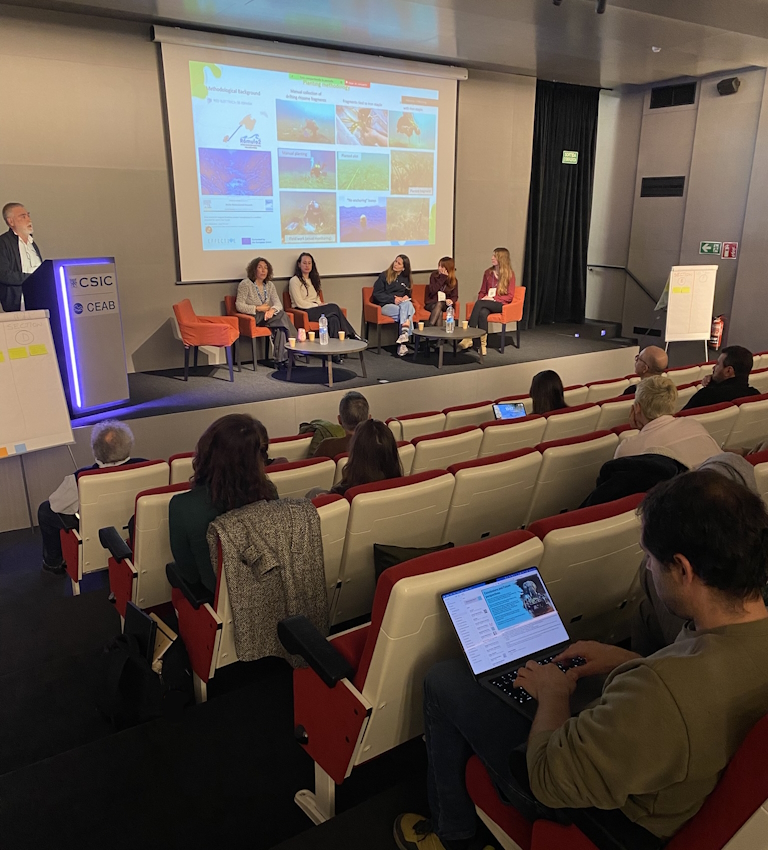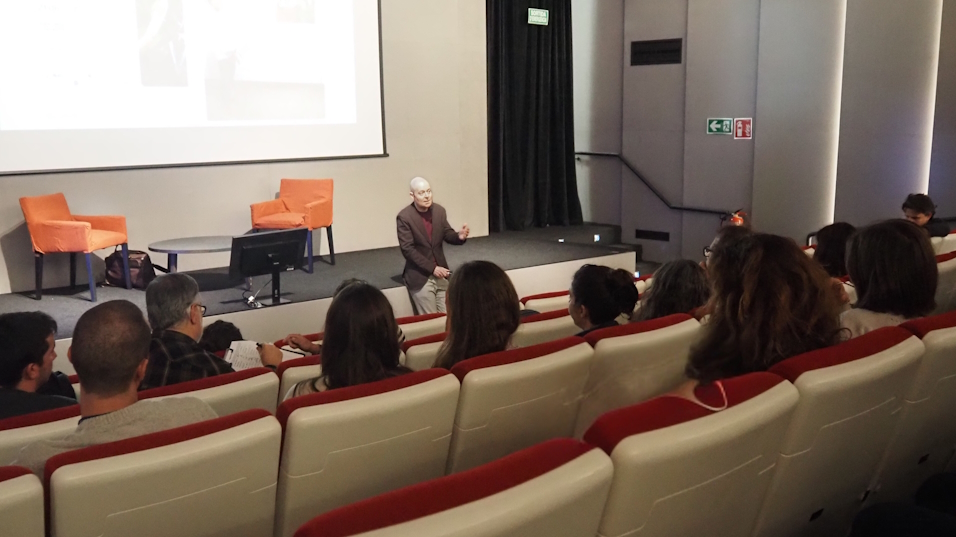
On 22 January, the Centre for Advanced Studies of Blanes (CEAB-CSIC) hosted the scientific seminar The loss of Indigenous knowledge in the face of plant and language extinction, delivered by the renowned ecologist Jordi Bascompte, currently Professor at the University of Zurich (Switzerland) and recipient, among other distinctions, of the Ramon Margalef Prize in Ecology. The activity formed part of the seminar series funded by the MaX-CSIC project.
The scientific talk focused on a component often overlooked in ecological studies: Indigenous knowledge. Drawing on the concept of Indigenous knowledge networks, Bascompte showed how a large part of the knowledge about plants and their uses accumulated by peoples and communities is being lost along with them and with the disappearance of many languages, as this knowledge has been transmitted mainly orally and is not preserved in written documents.
Dr Bascompte highlighted the relationship between language loss and the disappearance of knowledge that is intrinsically associated with it. This is the case, for example, for much of the knowledge related to the medicinal uses of plants, which is linguistically unique (that is, it exists in only one language), making each Indigenous language an irreplaceable reservoir of knowledge.
The ecologist also presented results on climate change trajectories and the loss of plant species in regions such as the Amazon, and analysed how the impacts of climate change interact with the risk of language extinction in this and other parts of the world. The central message was clear: cultural conservation and ecological conservation are inseparable.
Interview and discussion
In the afternoon, a second scientific event took place: CEAB-CSIC researcher Dani Oro interviewed Jordi Bascompte about another recent study, on a very different topic. On this occasion, the discussion focused on the origin of eukaryotic cells as an algorithmic transition in evolution. The dialogue addressed key questions in evolutionary ecology, such as the role of cooperation, the significance of major evolutionary transitions and the idea of progress in evolution. The session concluded with an open discussion with the audience.