An international study, carried out in the coastal waters of the Galápagos Islands and co-led by CEAB-CSIC researchers, has developed a new indicator, oceanographic resistance, which helps explain why some nearby fish communities differ while others farther apart resemble each other. The results show that the direction and intensity of local currents are among the key factors determining marine biodiversity, with an explanatory power comparable to traditionally studied variables. The work highlights the need to incorporate this perspective into aquatic biodiversity research.
The study, recently published in the journal Diversity and Distributions, combines two complementary ways of observing the ocean. First, the team analysed environmental DNA present in water samples (genetic material left behind by organisms through biological traces) to identify the fish present at different locations across the archipelago. Second, they used high‑resolution oceanographic models to reconstruct the direction and intensity of currents between these sites. The aim was to determine the extent to which local water circulation shapes biodiversity patterns alongside more commonly studied factors such as geographic distance or temperature.
The research was conducted by an international team from the University of Copenhagen, the Centre for Advanced Studies of Blanes (CEAB‑CSIC), the University of Johannesburg, the National Oceanography Centre / the University of Southampton, the Galápagos Science Center, the Universidad San Francisco de Quito, and the MigraMar research network.
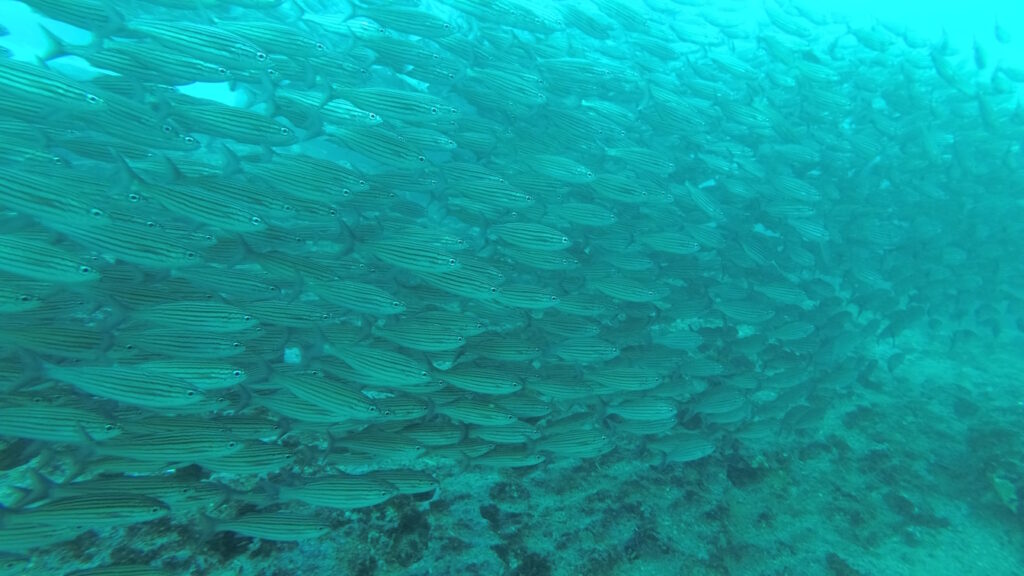
The team analysed water samples collected at different depths from 23 sites across the Galápagos and identified 551 sequence variants associated with bony fishes, sharks, and rays. Of these, 66 could be assigned to a specific species and 216 to a genus. Using metabarcoding—a technique that identifies multiple organisms simultaneously from genetic traces in the water—they obtained a view of diversity that would be difficult to achieve through direct observation alone.
The results revealed significant differences in fish community composition across the archipelago. These areas do not necessarily differ in overall richness, but in the specific assemblages of species present. In general, the detected patterns align with previously described marine bioregions in the Galápagos, but with nuances that reveal a more complex structure.
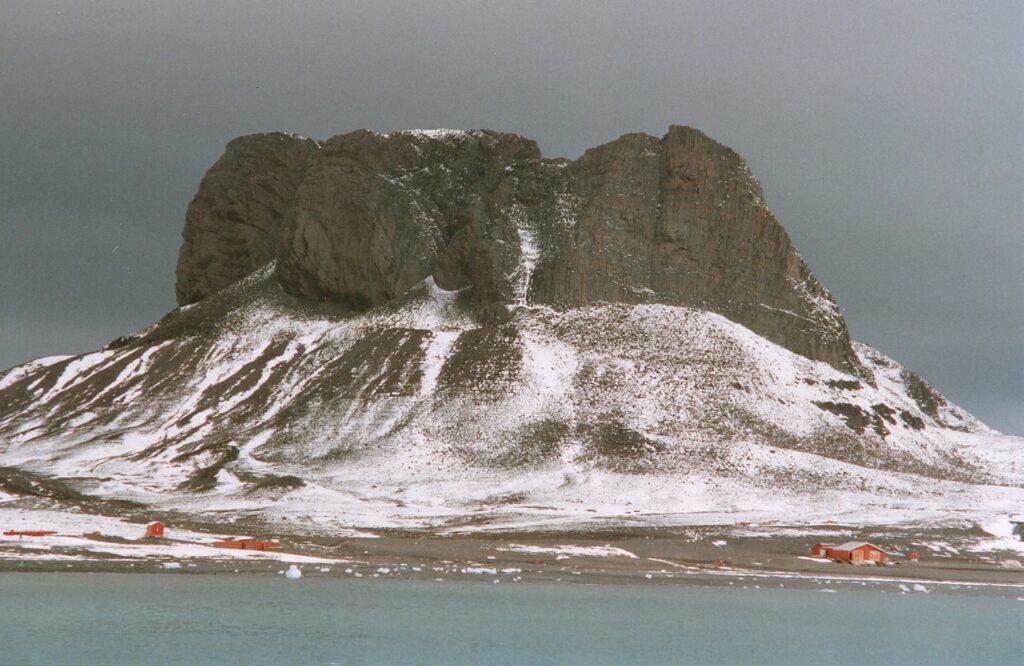
One example is Roca Redonda, whose communities showed greater affinity with sites in the northern bioregion than with those in the western region, despite geographical proximity. This similarity reveals a pattern not captured by earlier classifications. The result illustrates that distance alone cannot fully explain community composition; it is also necessary to consider how water moves between locations.
“We’ve long known that the Galápagos is a biodiversity hotspot and that the rich nutrient upwelling from the west has an important role to play in the beautiful marine communities that live there. We found the conventional oceanographic approaches to understanding current flow didn’t help us to resolve the puzzle of how these currents influence fish biodiversity. So we developed a new metric called Oceanographic Resistance that allowed us to link ocean currents from our models to DNA sequences we collected from the seawater,“ said Luke E. Holman, Assistant Professor at the University of Copenhagen and first author of the study.
“To understand how marine communities are organised, it is not enough to consider distance and other traditionally important factors such as temperature. We also need to know how water moves—including local variability—because this can enhance connectivity between theoretically distant communities and maintain strong differences between communities living in nearby areas,” explains Marc Rius, researcher at CEAB‑CSIC and co‑author of the study.
To study the influence of currents, the team first used a common oceanographic method: releasing virtual particles in a simulation and observing where the water carries them, as if they were floating objects. This approach represents passive transport of many species or their eggs and larvae, but not the movements of adult fish, which swim actively and may move against the current. To overcome this limitation, the researchers developed oceanographic resistance, a new indicator that calculates the extent to which current direction and speed facilitate or hinder movement between two locations. Unlike particle tracking, this indicator allows displacement calculations even when currents do not directly connect the sites.
Incorporating this new metric into models and comparing it with environmental DNA data revealed that small‑scale oceanographic processes play a more important role in marine biodiversity distribution than commonly assumed. Its explanatory power was comparable to that of geographic distance. Two locations separated by similar distances may host different communities depending on how water circulates between them: communities tend to resemble each other when the route follows the predominant current direction and differ when it goes against it. The effect of currents was also more significant than water temperature in shaping community distribution. Temperature was significant in only one model, whereas local currents consistently appeared across analyses.
According to the authors, this perspective could be applied in other regions and adapted to ecosystems and organisms with different modes of movement. It may help clarify how local currents structure marine communities and refine bioregional boundaries, with potential implications for biodiversity management and conservation.
Art. Ref.: Holman, L. E. et al. (2026). Fine-Scale Oceanographic Processes Shape Marine Biodiversity Patterns Inferred From Environmental DNA in the Galápagos Islands. Diversity and Distributions, 32, e70239. DOI: 10.1111/ddi.70239.
Audiovisual resources: interactive web portal showcasing the biodiversity of the Galápagos Islands revealed through environmental DNA (eDNA) collected from seawater samples.