The Spanish National Research Council (CSIC), AstraZeneca and RMIT University (Australia) have signed a collaboration agreement to incorporate RMIT research staff into the nature-based solutions project currently being carried out in the Rubí stream (Vallès Occidental, Barcelona).
The collaboration will take place within the framework of the AuSpire doctoral and postdoctoral training programme under the Marie Skłodowska-Curie Actions (MSCA), coordinated by RMIT Europe. Initially, it will involve the incorporation of a postdoctoral researcher from the Australian university into the “Water for Life” team (led by IDAEA-CSIC, CEAB-CSIC and Naturalea). The researcher will contribute to the scientific evaluation of the measures being implemented and assess their applicability in other locations.
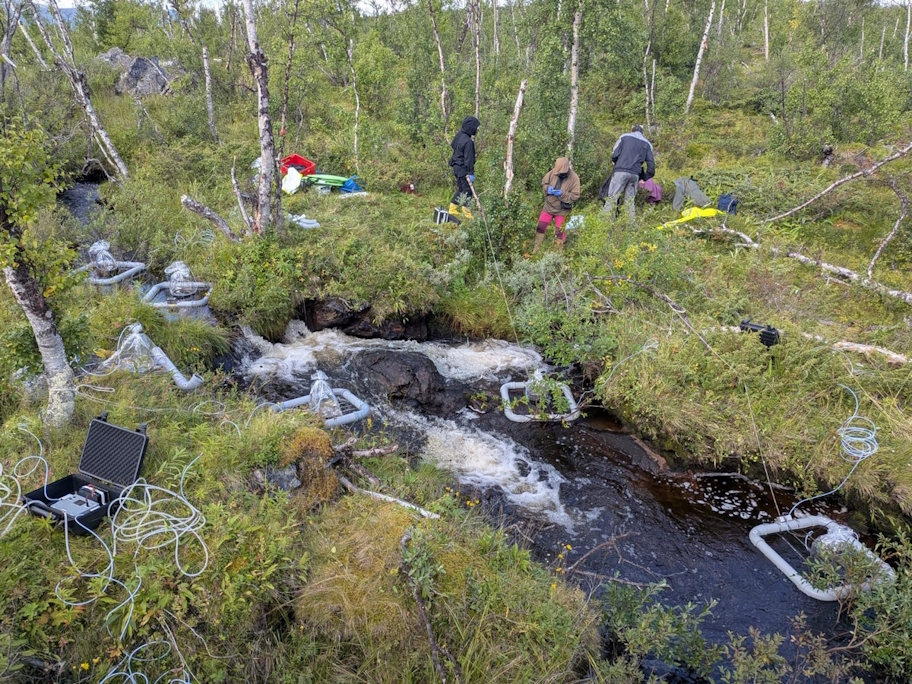
“Water for Life” is a pilot project promoted by the Catalan Water Agency (ACA), the Baix Llobregat County Council, CSIC and AstraZeneca. It involves the creation of an area of constructed wetlands at the outlet of the Rubí Wastewater Treatment Plant (WWTP) so that treated water passes through a complementary natural treatment system before being returned to the stream. These wetlands incorporate native plants, microorganisms, sediments and innovative materials whose effectiveness in reducing chemical and biological contaminants resistant to conventional treatment processes has already been demonstrated in previous scientific studies, including those carried out at the Urban River Lab.
The ultimate aim of the project is to return higher-quality water to the stream in order to restore habitats and biodiversity and, ultimately, support its ecological restoration. The initiative also seeks to identify the most effective combinations of natural elements for different types of contaminants and to assess the applicability of these solutions to other urban streams and rivers.
 Scientific cooperation to address shared challenges
 Scientific cooperation to address shared challenges
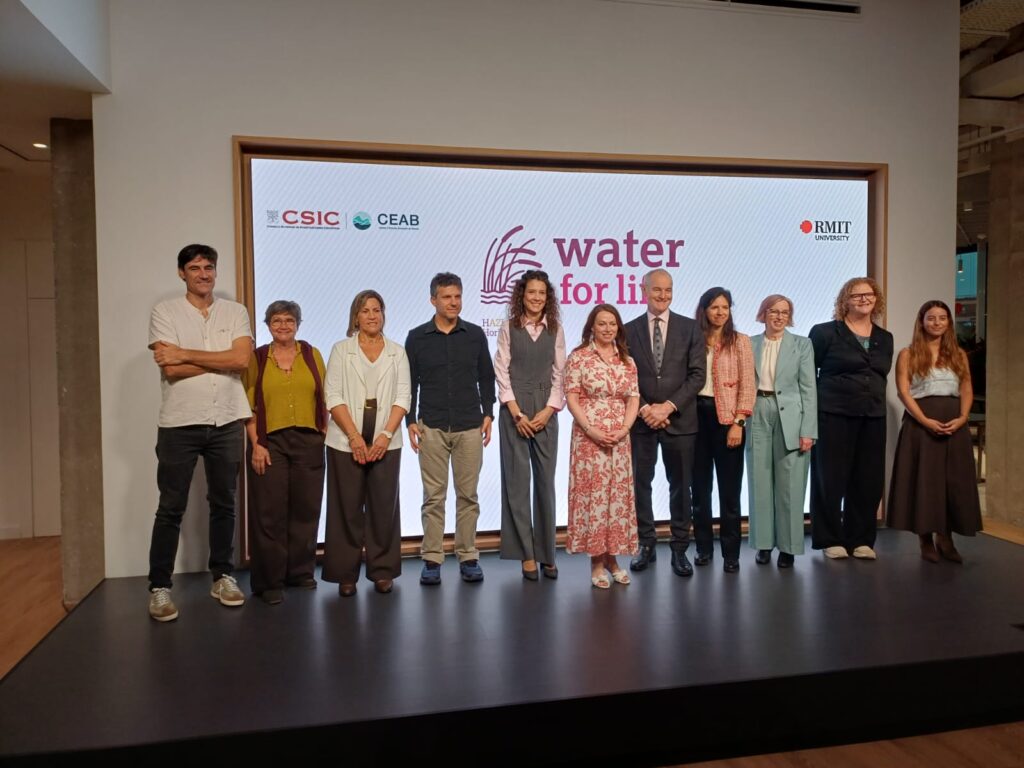
The agreement, formally signed this week, further strengthens scientific cooperation between Catalonia and Australia, two geographically distant regions that nevertheless face shared challenges relating to water availability, rainfall variability and the need to promote solutions to address global change.
Alec Cameron, Vice-Chancellor and President of RMIT University, stated:“RMIT’s presence in Barcelona enables collaborations such as this one and allows us to build lasting relationships that drive research and innovation towards a sustainable future. Society’s most pressing challenges cannot be solved in isolation, and we are pleased to contribute our expertise in water quality. We greatly value AstraZeneca and CSIC as partners and are proud to further strengthen this relationship today.”
Rosemary Morris-Castico, Australian Ambassador to Spain, highlighted: “Despite the geographical distance between us, projects such as ‘Water for Life’ remind us how much we have in common. Both countries understand the importance of water, healthy ecosystems and resilient communities. By combining Australian and Spanish expertise, this project is generating knowledge that can help us better understand how nature-based solutions can contribute to environmental restoration and water management.” She added: “This collaboration is particularly valuable because of its focus on delivering practical outcomes. It brings together complementary expertise to generate new knowledge, strengthen scientific ties and develop solutions that could benefit other regions facing similar challenges.”
Marta Moreno, Vice-President of Corporate Affairs and Market Access at AstraZeneca Spain, said: “The environmental challenges we face require new forms of collaboration and the pooling of capabilities across different sectors. This project reflects the value of bringing together scientific knowledge and local action to improve the management of natural resources. Collaboration with CSIC and RMIT University will enable us to analyse the impact of these nature-based solutions, draw lessons from their implementation and generate evidence that can support their application in other environments facing similar challenges.”
Ethel Eljarrat, Director of the Institute of Environmental Assessment and Water Research (IDAEA-CSIC), stated: “The ‘Water for Life’ project is a clear example of what can be achieved when public authorities, companies and research institutions work together, turning an idea into a reality on the ground.” She also added:“Scientific development aimed at finding solutions to a global challenge such as water management knows no borders. For this reason, collaboration and knowledge transfer between institutions in different countries are so important.”
Marc Rius, Director of the Blanes Centre for Advanced Studies (CEAB-CSIC), added: “This project comes at a crucial time for preserving water resources in ecosystems that are increasingly exposed to extreme conditions. The current global climate situation makes it essential to seek solutions based on scientific knowledge at an international scale.”