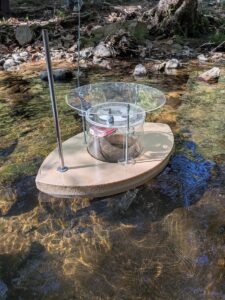
How can the fluxes of these gases be continuously monitored in river headwater areas that are difficult to access and where access to electricity and communications is limited? As part of the SERVICO2 European project, coordinated by CEAB-CSIC, a modular and autonomous sensor system is being developed to measure natural greenhouse gas fluxes in both terrestrial and aquatic environments.
The system combines environmental sensors, automated flux chambers, local data processing, long-range wireless communication and autonomous power supply. Its modular architecture is designed to enable long-term environmental monitoring while retaining sufficient flexibility to adapt to different sites and measurement requirements.
A sensor node for terrestrial and aquatic environments
The core of the system is a sensor node based on an STM32 NUCLEO-L476RG microcontroller or a Raspberry Pi Zero W–Arduino configuration. It collects and processes information from a range of sensors that measure atmospheric, soil and water conditions.
The current configuration includes Telaire T6615 NDIR sensors for CO₂, BME280 modules to measure air temperature, relative humidity and atmospheric pressure, DS18B20 thermistors to measure soil and water temperature, and capacitive sensors to determine soil moisture.
Particular attention was paid to CO₂ measurement, which is essential for the operation of the flux chambers. The Telaire T6615 uses non-dispersive infrared (NDIR) technology and a dual-channel measurement/reference configuration, providing automatic calibration capabilities and improved stability for long-term measurements.
The node does not only collect environmental data. It also controls the mechanical components that enable the measurement chambers to operate automatically, such as fans and motors.
Connecting measurements via LoRa
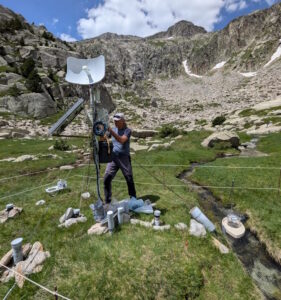
Collecting measurements at remote sites is only part of the challenge: the data must also be stored, transmitted and monitored remotely. For this reason, the prototype incorporates a long-range LoRa wireless communication link.
The communication system consists of three main stages. First, the sensor node acquires and processes the environmental measurements. These data are transferred to an intermediate communication node, which stores a local copy on a microSD card, manages the system’s operating mode and transmits the information via LoRa. Finally, a Raspberry Pi-based remote node receives the information and provides data visualisation, remote monitoring and a connection to a cloud storage system via Wi-Fi or Ethernet.
The LoRa connection uses Seeed Studio LoRa-E5 Mini modules, which provide a compact, low-power solution for long-range communications.
An important feature is that the communication is bidirectional. The system not only transmits measurements collected in the field, but can also receive instructions remotely. Different operating modes can be selected, including normal operation, debugging and testing, either locally or through the LoRa link. This makes it possible to monitor and reconfigure the sensor system without having to access the measurement site directly.
Designed for autonomous operation
Autonomy is essential for environmental monitoring at remote sites. The first two stages of the system have an estimated continuous power consumption of approximately 6–7 W. The current power supply configuration combines a 12 V, 12 Ah AGM battery, providing approximately 24 hours of autonomy, with a 20–30 W solar panel and a charge controller.
This configuration is designed to enable continuous operation without relying on fixed electrical infrastructure. Further development will focus on optimising energy consumption, component costs and mechanical operation.
Putting the prototype to the test
Following the development and integration of the different components, the complete system moved from the laboratory to the field.
First, tests were carried out to verify the integration and operation of the sensors, data acquisition electronics, actuators and communication modules, as well as to assess the consistency and stability of the measurements under controlled conditions.
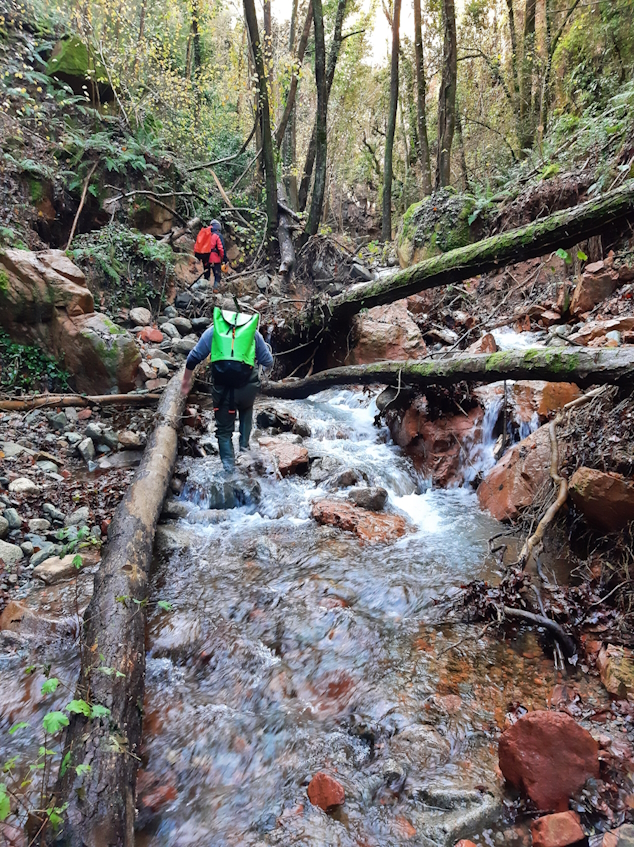
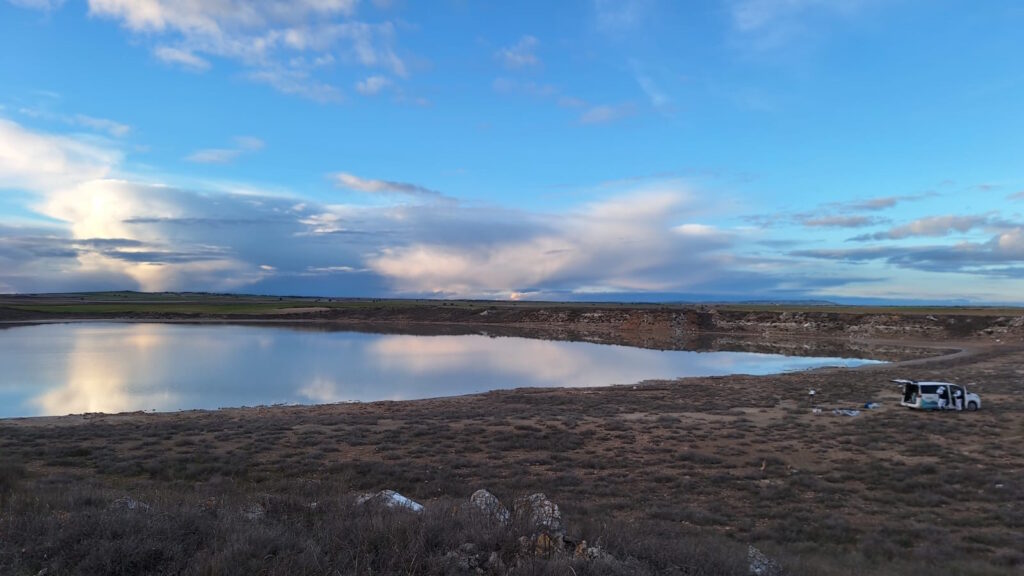
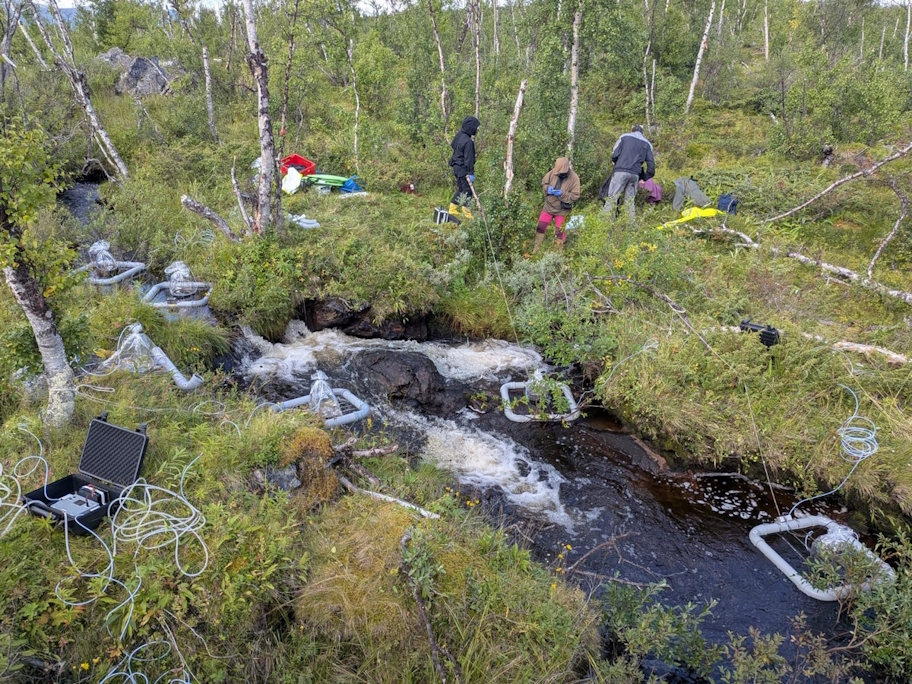
The system was subsequently deployed at Fuirosos, in the Montnegre coastal range, and at Contraix and the Orris ravine, in the Pyrenees. These sites provided real-world conditions in which to evaluate the entire measurement chain — from detecting environmental variables and operating the chambers to storing and remotely transmitting the data. They also helped to identify and resolve issues related to sensor behaviour, communication reliability, power supply and the overall integration of the system.
These tests represent an important step towards using the technology in longer-term environmental monitoring campaigns. The experience gained in the field is now informing improvements to the prototypes, with the ultimate aim of providing a cost-effective, autonomous and adaptable platform for high-resolution monitoring of greenhouse gas (GHG) fluxes in headwater catchments.
About the SERVICO2 project
SERVICO2 is a European project coordinated by the Centre for Advanced Studies of Blanes (CEAB-CSIC). It investigates the role of river headwaters in regulating greenhouse gases and how this function is affected by climate change, atmospheric nutrient deposition and changes in land use.
The project combines long-term environmental data, modelling and new monitoring technologies across a range of headwater ecosystems in Europe. It also places an important emphasis on knowledge transfer, dissemination and communication, understood as an exchange with the different stakeholders involved that allows knowledge and perspectives to be shared while also highlighting the importance of these ecosystems.
Throughout its first year, SERVICO2 has made progress in deploying its first monitoring prototypes and conducting field tests, while strengthening scientific collaboration between the different European teams and promoting knowledge exchange at conferences, meetings and other leading scientific forums.
More information about the project can be found in these articles:
👉 SERVICO2 on the move: an active year of science, collaboration and international exchange
👉 From prototype to the field: developing a new system to monitor greenhouse gases
👉 Spring–summer 2026: SERVICO2 takes to the field