-
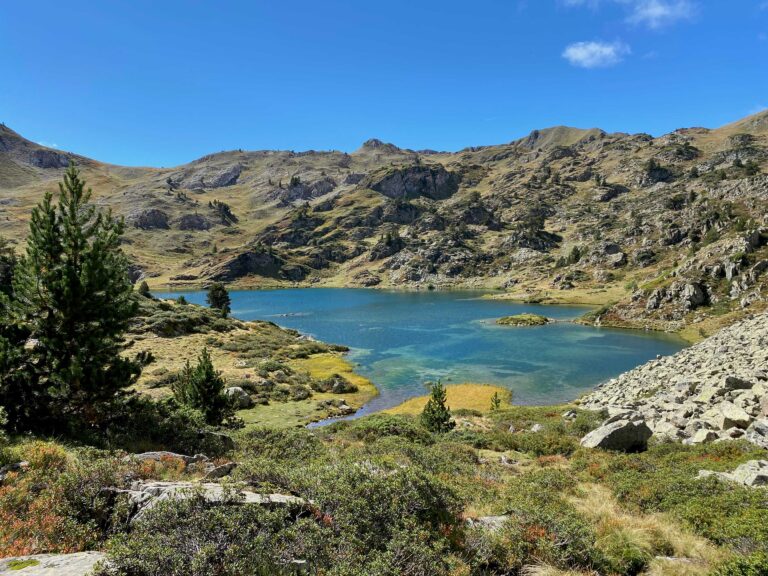
Minnows have been completely eradicated from the lakes of Tres Estanys del Mig and Tres Estanys de Baix in Alt Pirineu Natural Park
-
Ten months after the eradication programme, both lakes show a remarkable recovery in water clarity and biodiversity, including the return of amphibians and aquatic invertebrates, groups that had not been recorded since monitoring programmes first began in 2014
-
The initiative, carried out within the framework of the European LIFE RESQUE ALPYR project, provides new evidence on the use of rotenone as a tool for ecological restoration
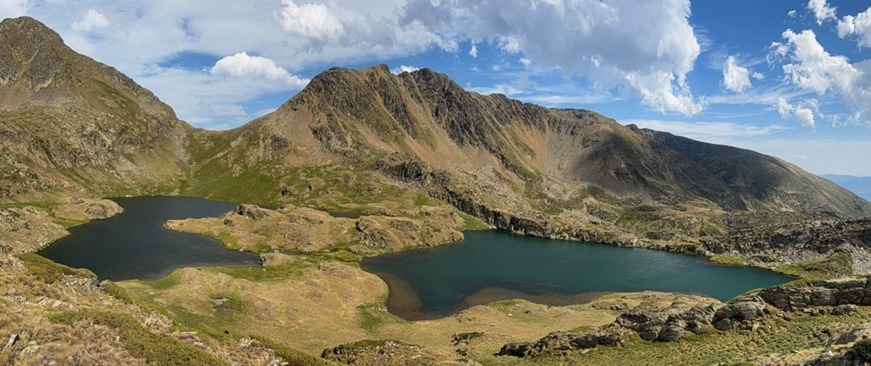
The first observations carried out following the intervention at the lakes of Tres Estanys del Mig and Tres Estanys de Baix, in Alt Pirineu Natural Park, confirm the complete eradication of minnows (Phoxinus spp.) and provide evidence of the first signs of ecological recovery. The presence of this fish in the Catalan Pyrenees is the result of its accidental introduction as live bait for recreational trout fishing, a practice that has caused significant alterations to these high-mountain ecosystems.
The intervention, carried out last September within the framework of the European LIFE RESQUE ALPYR project, involved the application of rotenone, a biodegradable piscicide, with the aim of restoring the ecological balance of these lake ecosystems and generating scientific evidence on the effectiveness and safety of this restoration methodology. This is the second pilot trial undertaken in lakes of the Catalan Pyrenees, following the intervention conducted in September 2024 in Lake Manhèra, in the Val d’Aran.
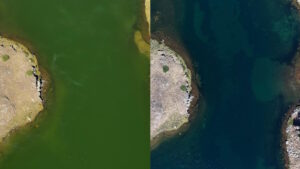
Data collected to date confirm that the intervention achieved its main objective, namely the eradication of minnows from both treated lakes. At the same time, the first monitoring results show clear signs of ecological recovery, including a marked improvement in water clarity and the return of amphibians and aquatic invertebrates, groups that are particularly sensitive to the impacts caused by this introduced species.
According to Barend L. van Drooge, researcher at the Institute of Environmental Assessment and Water Research (IDAEA-CSIC), “Monitoring of rotenone levels in the water has confirmed that it degrades at the rate originally predicted, with a half-life of between 10 and 20 days. This reduces its persistence in the aquatic environment and suggests a very limited impact on the ecosystem.”
Furthermore, no traces of rotenone have been detected in the river located downstream of the treated lakes. This result confirms that, as anticipated, the product remained confined to the treatment area and did not disperse beyond the lakes targeted by the intervention.
Restoring altered ecosystems
Fish introductions are one of the main causes of biodiversity loss in high-mountain lakes. Minnows are a species that has become established in numerous Pyrenean lakes as a result of their accidental introduction as live bait for recreational trout fishing. Their high reproductive capacity and adaptability favour their spread and cause significant disruptions to aquatic food webs.
The presence of this fish leads to a substantial decline in biodiversity, particularly among small aquatic organisms and amphibian populations, as it preys on amphibian eggs and alters the conditions required for successful reproduction. For this reason, its eradication is considered one of the most effective measures for promoting the recovery of high-mountain lake ecosystems.
Surveys conducted ten months after treatment revealed a highly positive response, with a notable recovery in both water clarity and biodiversity. The return of amphibians and aquatic invertebrates has also been recorded. These groups had not been detected since the first monitoring programmes began in 2014.
A benchmark experience for the conservation of Pyrenean lakes
The intervention at Tres Estanys represents the second pilot trial developed within the LIFE RESQUE ALPYR project, following the experience at Lake Manhèra in the Val d’Aran. In both cases, minnows were successfully eradicated and the first signs of recovery of the characteristic biodiversity of high-mountain lakes have been observed.
According to Quim Pou-Rovira, Director of Sorelló Estudis al Medi Aquàtic and Technical Lead of the intervention, “In the case of Tres Estanys, the challenge was particularly significant because the intervention was carried out in a larger and more complex system than Lake Manhèra, given that it involved interconnected lakes.” The results obtained demonstrate that this methodology can also be effective in larger and more complex lake systems.
An important difference between the two lakes treated in Alt Pirineu is that previous minnow control measures had already been carried out at Tres Estanys del Mig using mechanical methods such as nets, traps and electrofishing. Although these actions did not completely eradicate the species, they succeeded in keeping the population under control for several years.
According to Marc Ventura, researcher at the Centre for Advanced Studies of Blanes (CEAB-CSIC) and coordinator of the LIFE RESQUE ALPYR project, “The initial data indicate that ecological recovery is progressing more rapidly in Tres Estanys del Mig than in Tres Estanys de Baix and Lake Manhèra. One possible explanation is that previous efforts to control minnow populations helped preserve a latent reservoir of species within the sediments, which may now be facilitating a faster recolonisation of the ecosystem.”
Long-term scientific monitoring
Although the eradication of minnows has already been confirmed in both pilot trials, the project partners stress that the full recovery of these ecosystems is a gradual process requiring long-term monitoring. For this reason, monitoring activities will continue over the coming years in order to assess changes in biological communities and document the recovery of the lakes’ natural ecological processes.
According to Marc Garriga, Director of Alt Pirineu Natural Park, “These initial results are very encouraging for the conservation of high-mountain lakes. Beyond the success of the intervention itself, the pilot trial demonstrates that it is possible to restore ecosystems that had lost a significant part of their biodiversity and to generate valuable knowledge for addressing similar challenges in other Pyrenean lakes.”
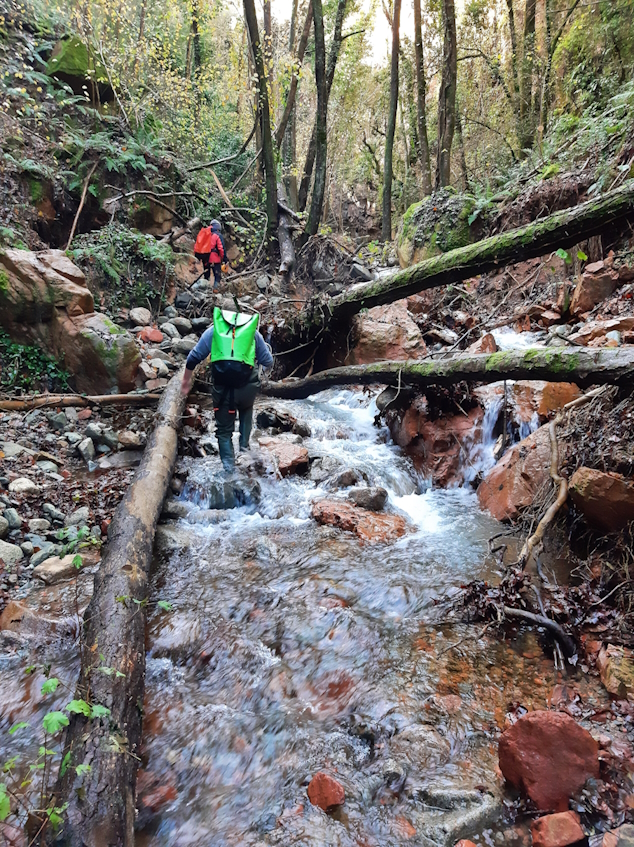
The intervention was coordinated and implemented by Sorelló Estudis al Medi Aquàtic, S.L. and the La Sorellona Association, under the scientific supervision of the Centre for Advanced Studies of Blanes (CEAB-CSIC) and the Institute of Environmental Assessment and Water Research (IDAEA-CSIC), with the direct support of Alt Pirineu Natural Park and Forestal Catalana.
LIFE RESQUE ALPYR project
LIFE RESQUE ALPYR aims to restore mountain aquatic habitats by improving the conservation status of a range of habitats and species in four Natura 2000 sites located within the Alpine biogeographical regions of the Pyrenees (north-eastern Spain) and the Alps (north-western Italy) (www.liferesquealpyr.eu).The project is co-funded by the European Union’s LIFE 2020 programme, which supports actions for the conservation and restoration of habitats and species of flora and fauna in protected areas within the Natura 2000 network. The project is coordinated by CEAB-CSIC.The Catalan partners are the Department of Territory, Housing and Ecological Transition of the Government of Catalonia, the Conselh Generau d’Aran, the University of Barcelona, IDAEA-CSIC, Forestal Catalana, Sorelló Estudis al Medi Aquàtic and the La Sorellona Association.The Italian partners are Mont Avic Natural Park, the University of Pavia, the University of Calabria and the Water Research Institute of the National Research Council of Italy (IRSA-CNR).In addition, the Andrena Foundation, Gran Paradiso National Park (Italy), and the municipalities of Espot and Lladorre contribute to the project as co-funders.