
Jolle Jolles
My research focuses on understanding how individual differences and social dynamics among animals drive collective behaviors and population responses to environmental change. I lead the


My research focuses on understanding how individual differences and social dynamics among animals drive collective behaviors and population responses to environmental change. I lead the
My main research interest is to understand how microorganisms adapt and respond to environmental change. In my group, we integrate metagenomics, microcosm and field experiments,

Our group explores the influence of endogenous population processes and exogenous stochastic forces that drive wildlife population dynamics. We use an empirical approach by monitoring individual and population data in the field to study the behavior of populations at spatial and temporal scales.
Theoretical study of ecological and evolutionary systems from an interdisciplinary and dynamic perspective, which integrates the biology and physics of these systems, using mathematical analysis and modeling, and computational simulation as main tools.
Development and application of artificial intelligence tools to optimize the speed of response to alerts sent by citizens through the Mosquito Alert platform.
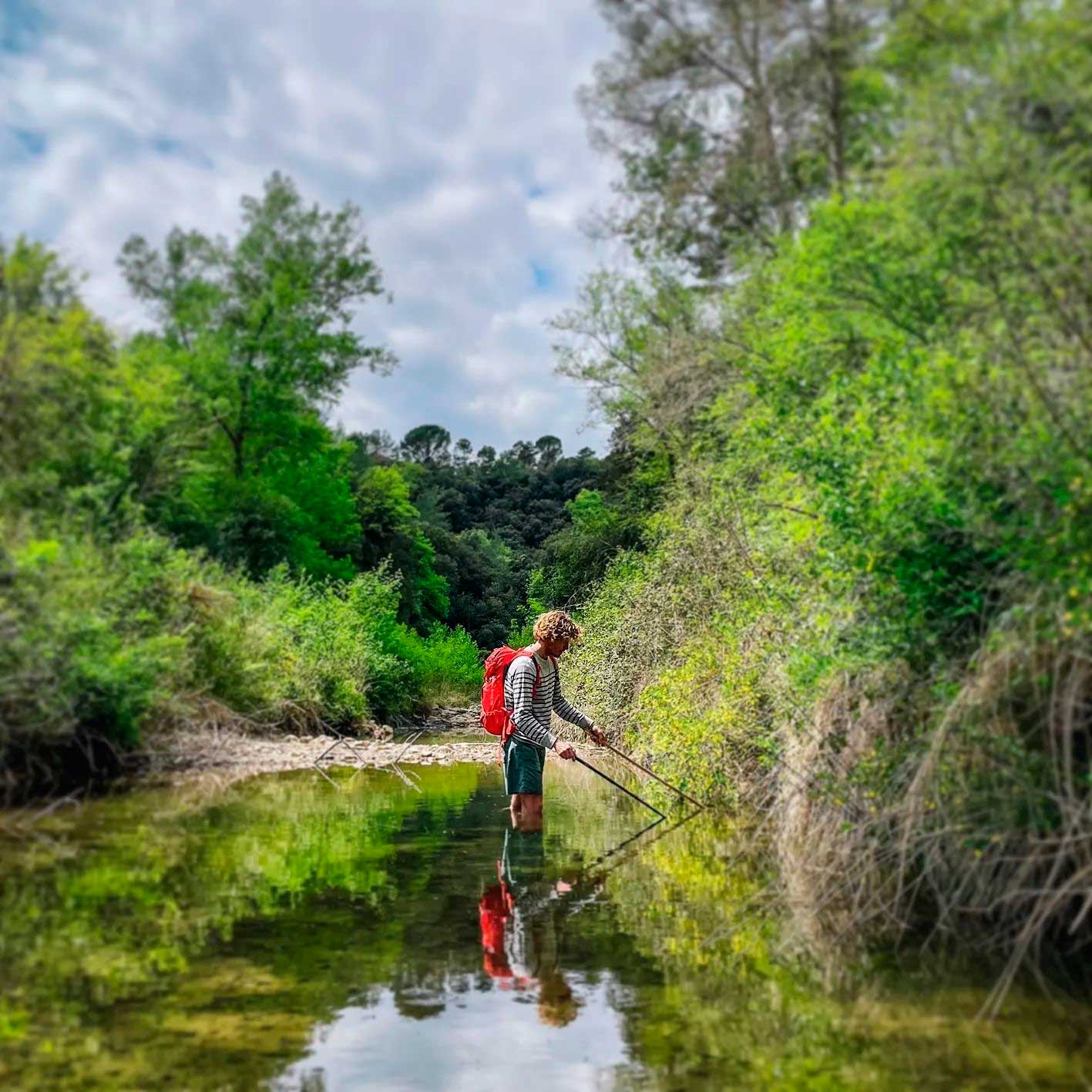
Investigating the effects of droughts on freshwater fish populations. The research project seeks to understand how individuals and groups of fish cope with severe droughts.

The expansion of Ae. albopictus in the Iberian Peninsula and the arrival of Ae. aegypti to the Canary Islands have increased the risk of serious outbreaks of dengue, chikungunya or Zika in Spain.

Many organisms form social systems, but most research does not consider collective processes to explain their ecological and evolutionary consequences for individuals and populations in stochastic environments. This application will help produce a new synthesis hitherto not considered.
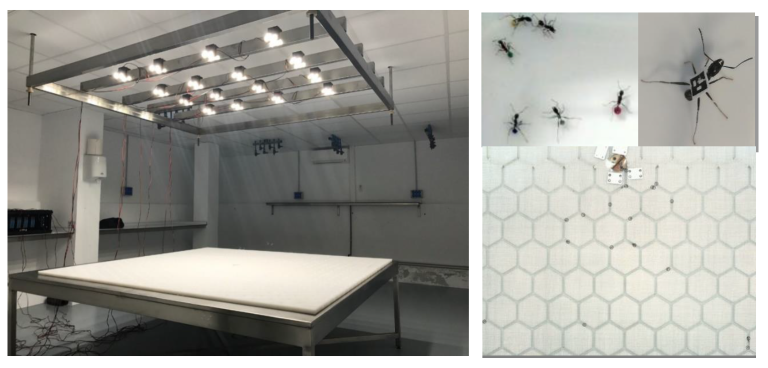
This proposal aims to study the processes linked to life in groups (which we call sociality) in an ecological framework, assembling data (both laboratory and field) to theory.
The project consists of creating a Versatile Observatory of Emerging Infectious Diseases (VEO) that makes it possible to bring together high-quality information from which to develop early warning tools. The Observatory will monitor emerging infectious diseases, as well as the emergence of bacterial resistance, in order to carry out a risk assessment.


