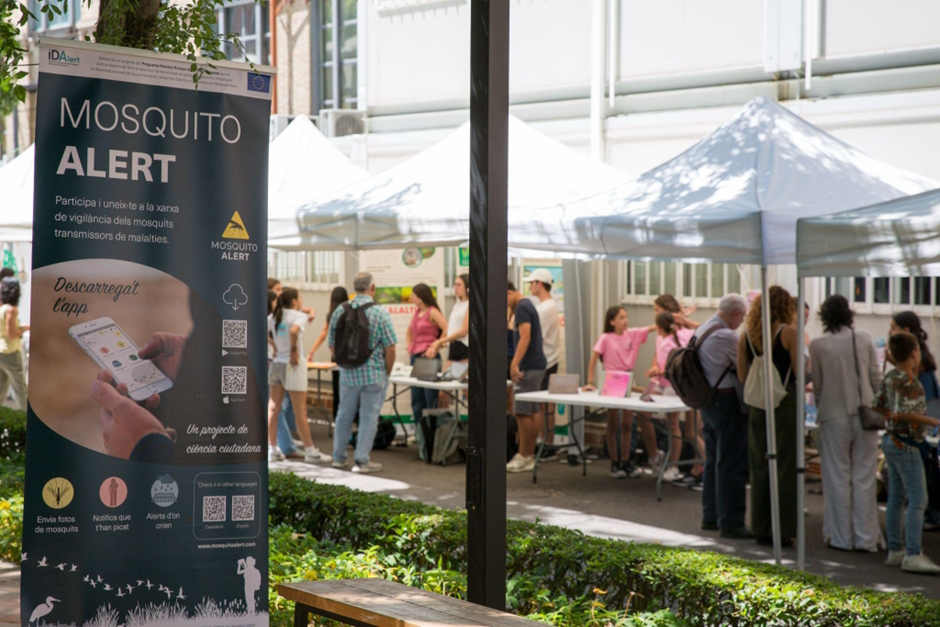
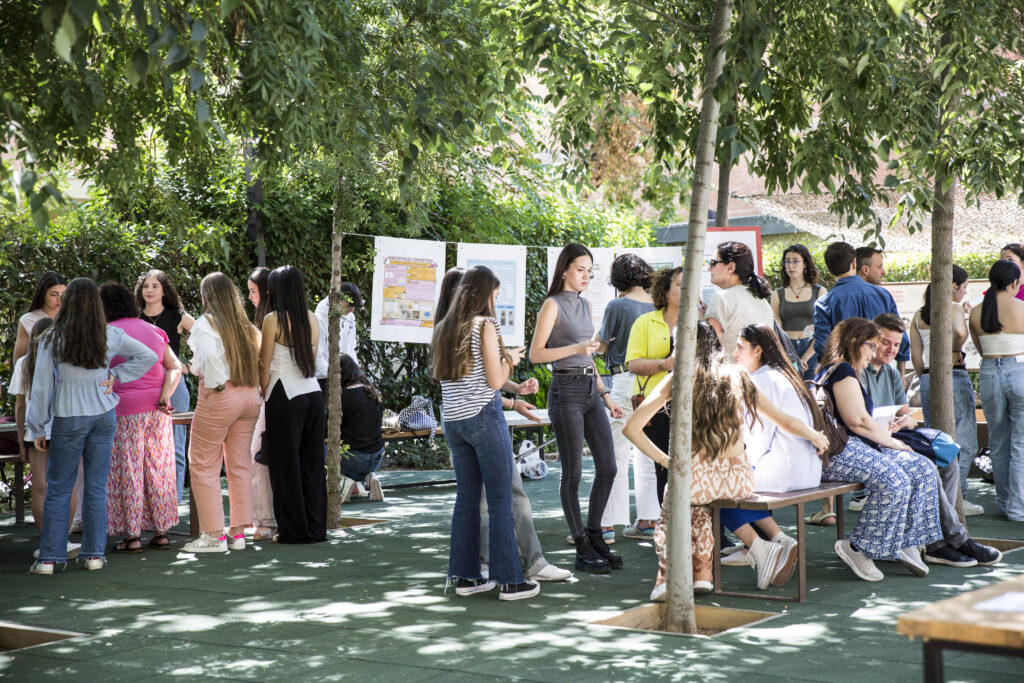
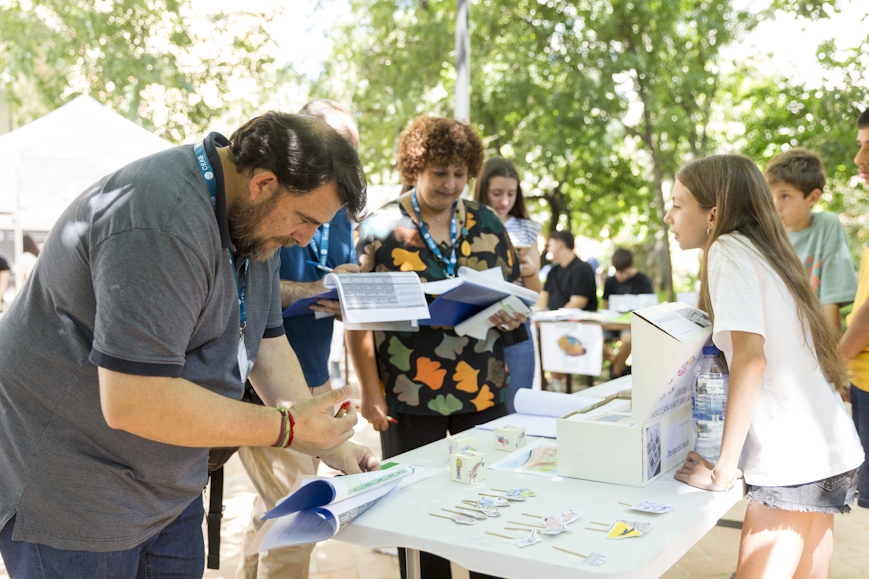
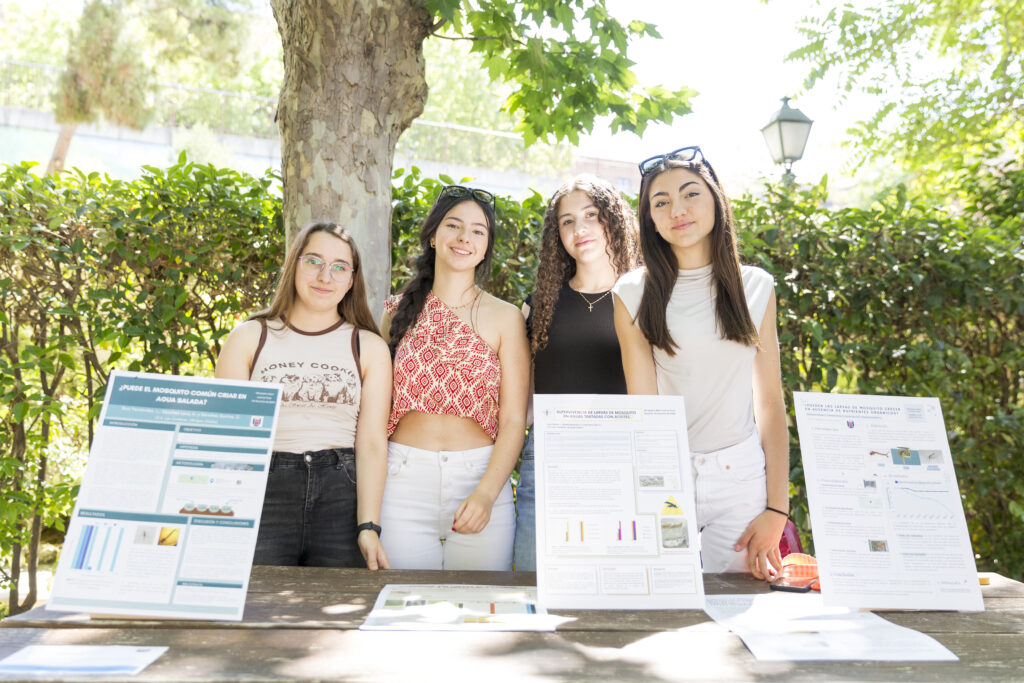
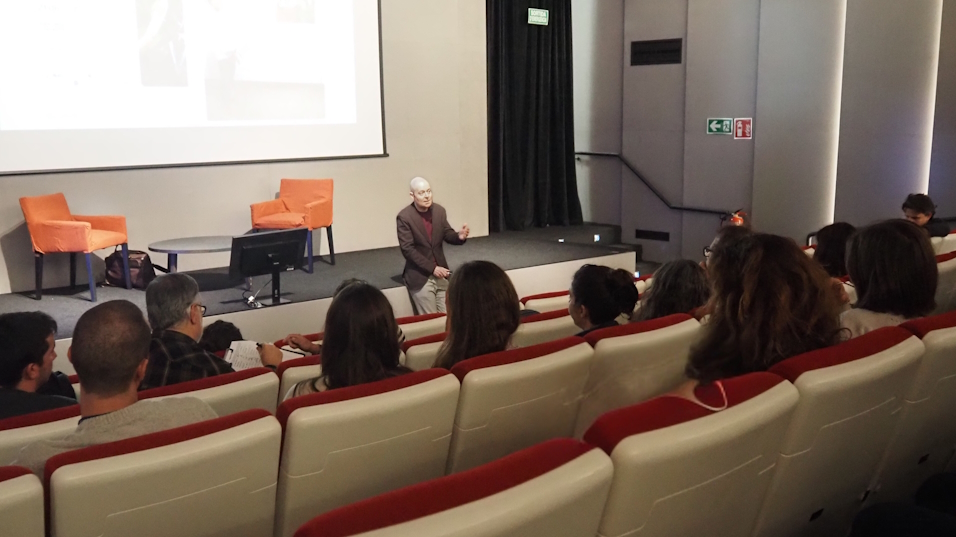
This morning, the gardens of the National Museum of Natural Sciences (MNCN-CSIC) in Madrid are hosting the 3rd Mosquito Alert Science Fair, the annual event that marks the end of the Mosquito Alert educational programme, coordinated by the Blanes Center for Advanced Studies (CEAB-CSIC) and the environmental association Xatrac.
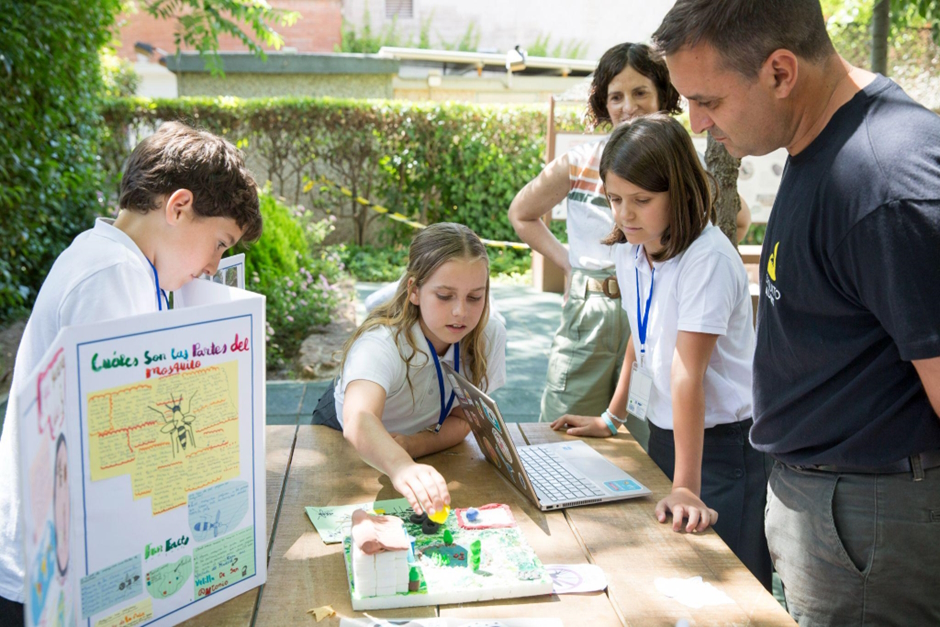
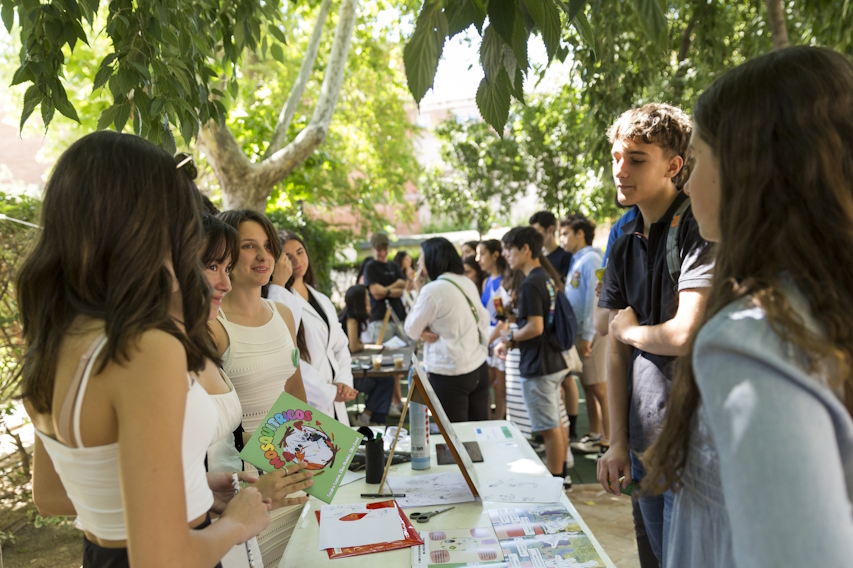
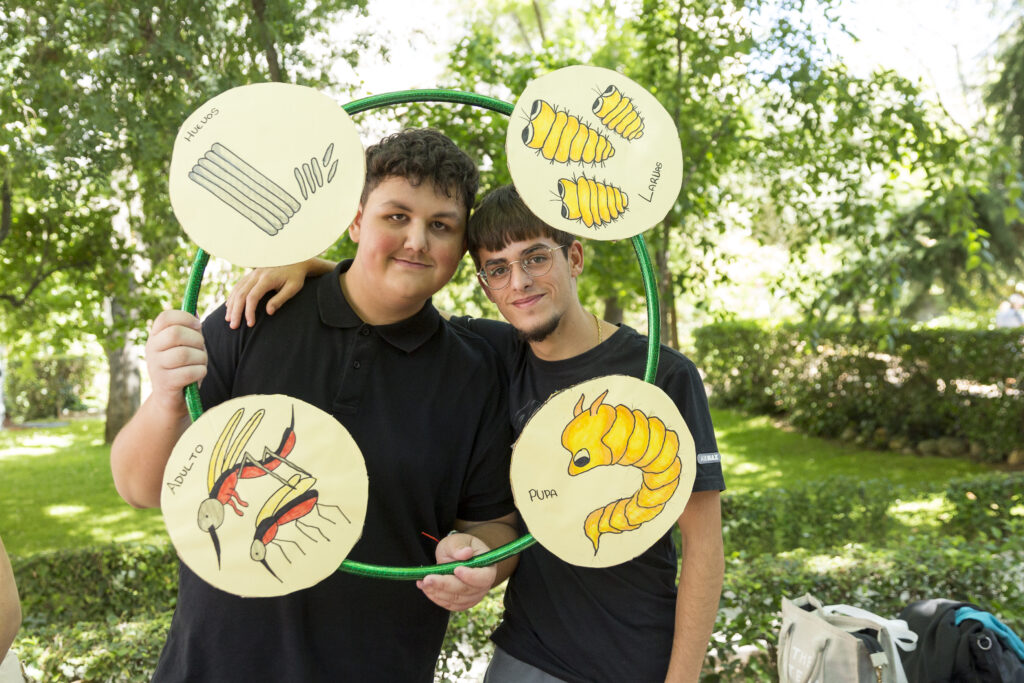
The day brings together around a hundred students and 26 teachers from 17 schools across 9 autonomous communities. Throughout the morning, students will present their communication campaigns and the results of the research carried out within the project.
A continuously growing educational programme
The fair marks the conclusion of a new edition of the Mosquito Alert educational programme, which during the 2025–2026 academic year involved 2,255 students from 60 schools across the country.
Throughout the year, students have worked on topics related to mosquito surveillance, scientific research, public health and citizen participation, integrating these themes through a project-based methodology adapted to different educational stages.
A morning to share knowledge and experiences
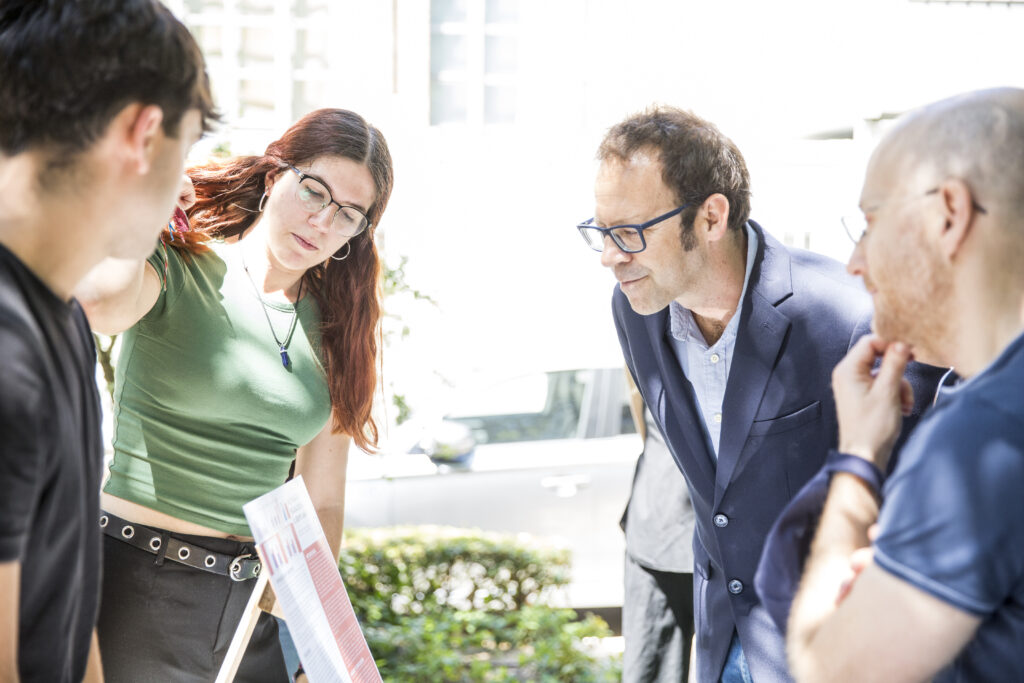
The Fair has become a meeting point where students can showcase their work to fellow participants and to a jury made up of professionals linked to research, education, science communication and public health.
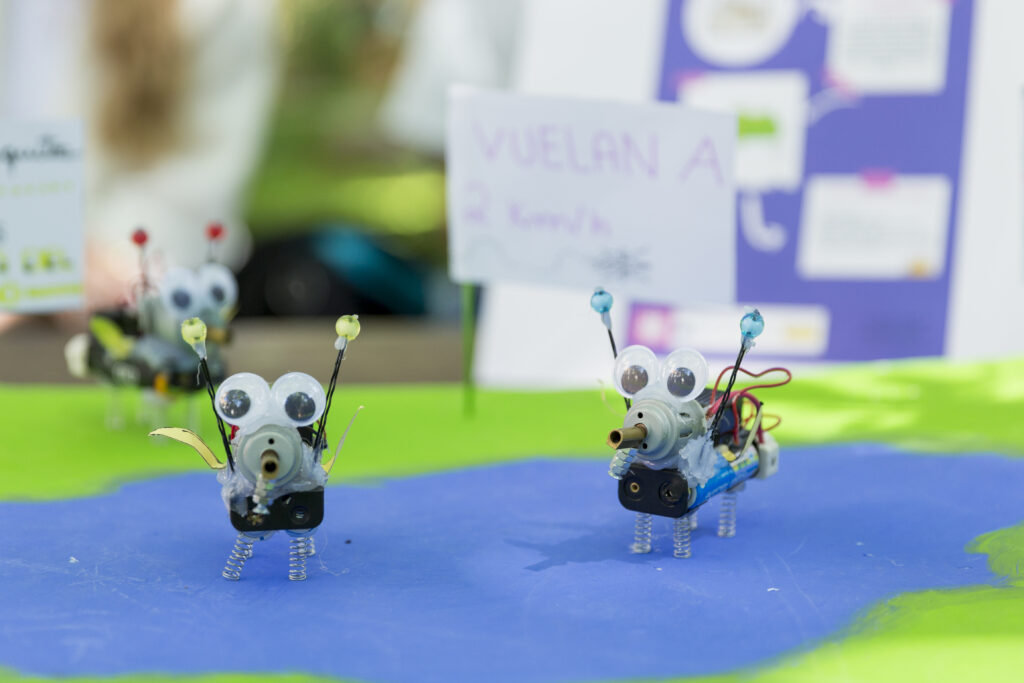
The projects presented reflect the diversity of approaches within the programme, combining scientific observation, creativity, communication skills and proposals for social awareness.
New features this academic year
Among the new elements of this third edition is the development of the Scientific Communicators category (Years 7 to 9 / 1st to 3rd of ESO). In this category, all participants have jointly created a science communication campaign with their entire class.
Some schools have organised science fairs in their schools and cities; others have produced television programmes, podcasts and outreach activities tailored to different audiences.
These experiences have allowed the knowledge acquired by students to extend beyond the classroom, amplifying the message. They also demonstrate how science communication is a fundamental tool for citizen participation.
Science, education and citizen participation
The event concludes with an awards ceremony to be held in the CSIC auditorium. The ceremony will be opened by Pura Fernández, Deputy Vice-President for Scientific Culture and Citizen Science at CSIC, who will welcome participating students.
The ceremony will be hosted by Bryan Ferreras, Director of Activities and Projects at Xatrac, the association responsible for delivering the Mosquito Alert educational programme, supported by CEAB-CSIC, the organisation that also coordinates the project.
The event aims to recognise students’ efforts and highlight the role of citizen science as a tool for learning and multidisciplinary collaboration.
Jury
SCIENTIFIC COMMUNICATORS (Years 7 to 9)
Paloma Arroyo Waldhaus holds a degree in Environmental Sciences and a Master’s in Environmental Infrastructure and Services Management. Since 2013 she has worked at the Deputy Vice-Presidency for Scientific Culture and Citizen Science of CSIC and currently coordinates the Ciudad Ciencia project, along with numerous activities developed by the VACC.
José A. Balmón holds a diploma in Special Education, degrees in Clinical Psychology and Social and Cultural Anthropology, and is a University Expert in Applied Entomology. He is a member of the Spanish Entomological Society and its Castilla-La Mancha branch. In recent years, he has devoted his spare time to studying and understanding the effects of climate change on butterflies and moths. He currently works as a teacher in La Solana (Ciudad Real).
Gemma Agell Llobet is a biologist who, after more than ten years in research, moved into science communication. She currently coordinates the Scientific Culture area at CEAB and promotes citizen science projects and educational initiatives linked to research.
YOUNG RESEARCHERS (Year 10 and Sixth Form)
Tomàs Montalvo is a biologist and the current Head of the Urban Pest Surveillance and Control Service at the Barcelona Public Health Agency. His work focuses on monitoring and controlling urban pests, as well as vector- and reservoir-borne zoonotic diseases, particularly those transmitted by mosquitoes.
Violeta Vicente del Olmo holds a degree in Environmental Sciences and later specialised in environmental education. Since 2009 she has worked at the Deputy Vice-Presidency for Scientific Culture and Citizen Science of CSIC. She is currently part of the team managing the Ciudad Ciencia and Madrid X+ projects, as well as coordinating the touring and lending of CSIC exhibitions.
Arantza Gómez de Segura holds a degree in Pharmacy (University of the Basque Country) and a PhD, with over 15 years of experience in scientific research. Her work has focused on biotechnology and holistic health. She currently combines her role as a science teacher at Virgen de Europa School with teaching at the Universidad Francisco de Vitoria, where she lectures in Science Education.