[vc_row][vc_column][vc_column_text]The main objective of the workpackage 1 (WP1) is to examine the role of biofilm in the transformation and retention of phosphorus (P) from the water column and its variability under different environmental conditions and human pressures.
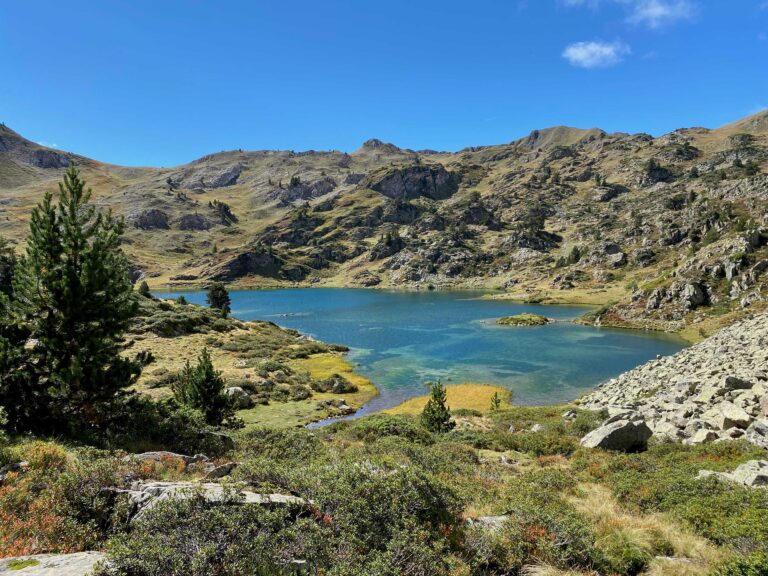
To do this, 12 sites were sampled along the main river course of the Ter River in four different moments of the year, covering the four seasons of an annual cycle. In the upper area of the Ter River, we selected the sites of Setcases (SET) and Sant Joan de les Abadesses (SJA). Further on, once the Freser River converges with the Ter River, we selected the following sites: Ripoll (RIP), Montesquiu (MON), Torelló (TOR), and Manlleu (MAN). Later, once the Gurri River converges with the Ter River, we selected the site of Roda de Ter (ROD). Next, after the three reservoirs that regulate the Ter River (Sau, Susqueda and El Pasteral), we selected the sites of Cellera de Ter (CET) and Aiguabarreig, the latter located in Sant Gregori. Finally, the last points are after Girona, where the Onyar River converges with the Ter River, which are in Celrà (CEL), Sobrànigues (SOB) and Torroella de Montgrí (TOM) in the final stretch of the river mouth.
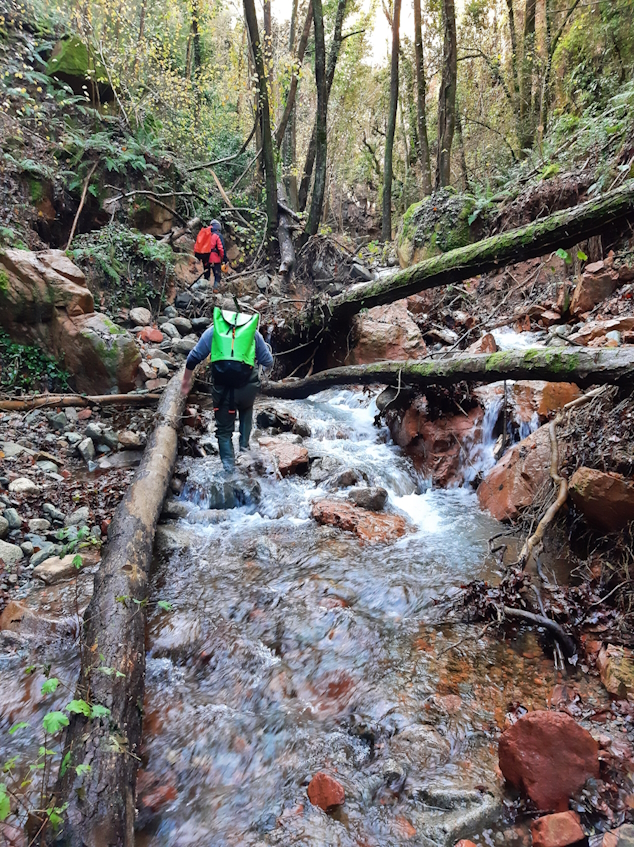
 [/vc_column_text][/vc_column][/vc_row][vc_row][vc_column][vc_empty_space][/vc_column][/vc_row][vc_row][vc_column width=”1/2″][vc_column_text css=”.vc_custom_1642415480207{margin-top: 100px !important;}”]Physicochemical measurements were made at each of the sampling points and water samples were collected to analyze the concentration of the different forms of carbon (C), nitrogen (N), and P. Also, biofilm samples were collected by scraping from the surface of cobbles, which were randomly chosen from two different reaches. From these samples, the biofilm will be characterized by parameters such as photosynthetic efficiency, microbial biomass, algal composition, community of prokaryotes, C-N-P ratio, chlorophyll-a concentration, microplastics, metals, etc.[/vc_column_text][/vc_column][vc_column width=”1/2″][vc_column_text]
 [/vc_column_text][/vc_column][/vc_row][vc_row][vc_column][vc_empty_space][/vc_column][/vc_row][vc_row][vc_column][vc_column_text]Additionally, in 6 of the 12 sampling points (SET, RIP, TOR, ROD, AIG, and SOB), “in situ” incubations of biofilms were carried out in transparent methacrylate chambers exposed to natural light and dark conditions. First, 3 cobbles colonized by biofilm communities were randomly chosen from the sampling point and placed in each chamber. P and N additions were made and water samples were collected for 4 hours, at hourly intervals. We quantified the P and N uptake rates as the change in P and N concentration per unit of time and per unit of surface, by calculating the total surface of cobbles incubated in each chamber. Additionally, the change in dissolved oxygen was measured during incubations to characterize biofilms by measuring net primary production (NPP), gross primary production (GPP), and ecosystem respiration (ER). Incident light measurements were made during incubations and water temperature was also measured. Moreover, the structure of the phototrophic community was investigated by measuring chlorophyll-a content of cobbles incubated, and the relative proportion of diatoms, cyanobacteria, and green algae.[/vc_column_text][/vc_column][/vc_row][vc_row][vc_column][vc_empty_space][/vc_column][/vc_row][vc_row][vc_column][vc_column_text]
 [/vc_column_text][/vc_column][/vc_row]