European nature restoration legislation requires ecological restoration measures to be implemented in habitats that are not in good condition. These include marine ecosystems, for which an initial target has been set to implement restoration measures across at least 30% of degraded areas by 2030. To determine which areas should be prioritised and how each should be restored, the Government of Catalonia has launched the Strategic Plan for the Restoration of Marine Ecosystems in Catalonia (PEREMCAT), a pioneering initiative in the Mediterranean.
The Plan is spearheaded by the Directorate-General for Maritime Policy and Sustainable Fisheries (Department of Agriculture, Livestock, Fisheries and Food). Its development is being carried out by researchers specialising in the different habitats, from the MedRecover and Benthic Ecosystem Functioning research groups, affiliated with four research institutions: the Centre for Advanced Studies of Blanes (CEAB-CSIC), the Institute of Marine Sciences (ICM-CSIC), the University of Girona (UdG) and the University of Barcelona (UB).
Emma Cebrian, PEREMCAT coordinator and researcher at CEAB-CSIC, explains: “Human activity has degraded marine ecosystems to such an extent that conservation alone is no longer enough. We are now being asked — and this is a regulation at European level — to restore them. To achieve this, we cannot carry on as we have until now, with isolated, local initiatives that often lack scientific support. We need a plan, a strategy, and that is where this project came from.”
Understanding ecosystems in order to restore them
The first step is to carry out an assessment: which habitats are found along the Catalan coast, what condition they are in, which show signs of degradation and what has caused it. This information will make it possible to identify priority areas, set restoration targets and determine the most appropriate actions and techniques for each case.
Types of marine ecosystems targeted for restoration
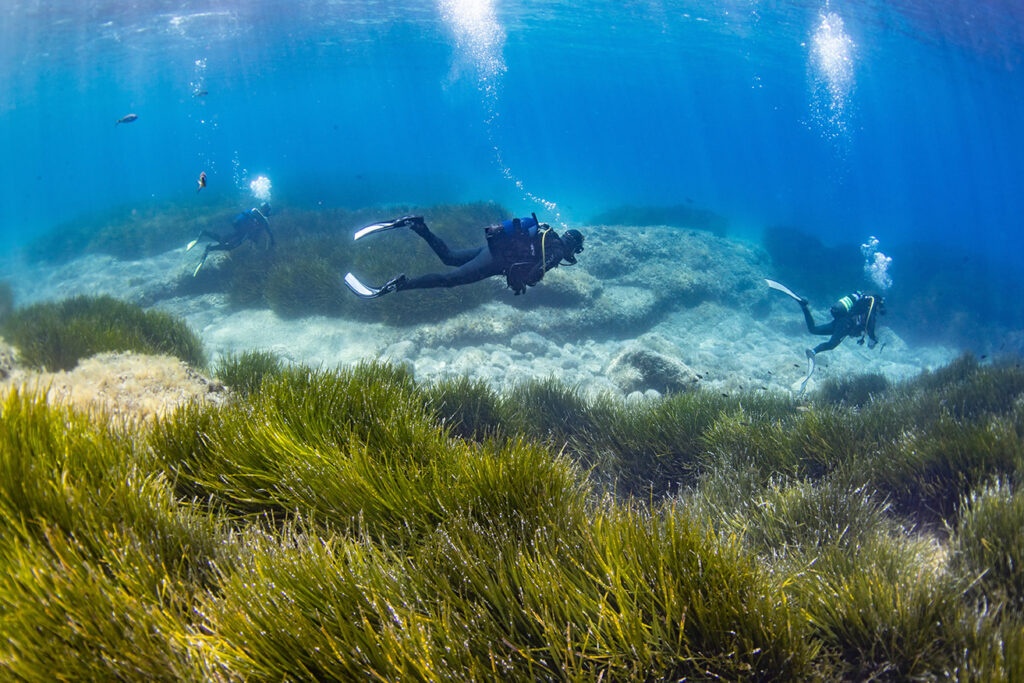
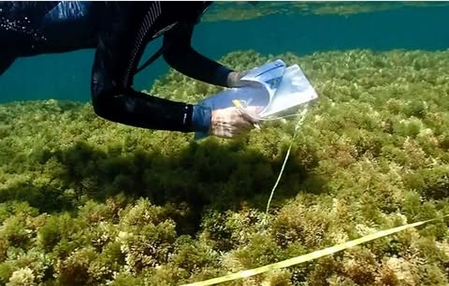
PEREMCAT focuses on four major habitats that function like forests and grasslands on land, but on the seabed. In other words, they create the habitat structure in which thousands of species live, shelter, feed and reproduce:
- Seagrass meadows
- Coralligenous habitats
- Rhodolith beds
- Macroalgal forests
Soft-bottom habitats, which cover the vast majority of the seabed, will also be taken into account.
From research to action
PEREMCAT goes far beyond assessing the current situation and developing a roadmap. It includes the first on-the-ground restoration actions — using techniques that have previously been scientifically validated, and assessing techniques that are already being applied but have not yet been systematically evaluated — as well as evaluating their results and generating knowledge that can be applied on a larger scale.
Collaboration is another key pillar of the project. It includes a dedicated workstream on governance, aimed at ensuring that public authorities, economic sectors, marine-related professionals and other stakeholders work together towards a common goal.
Further information:
PEREMCAT website (Government of Catalonia)