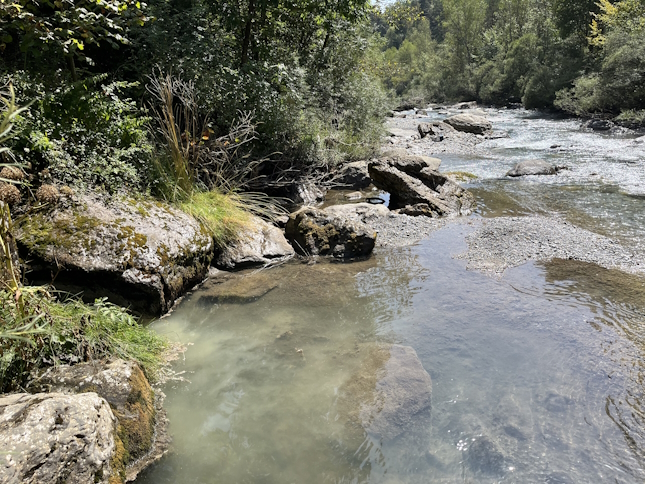
Wastewater in High Mountain Areas: Impact on Microbial Communities and Strategies for Its Mitigation (RAMi)
The project aims to design nature-based wastewater treatment solutions specifically adapted to high-mountain conditions.


The project aims to design nature-based wastewater treatment solutions specifically adapted to high-mountain conditions.

Exploring Invisible Biodiversity in Pyrenean Lakes, Sentinels of Climate Change, Through High-Resolution Portable Genomics

This project by CREAF-CSIC, with the direct participation of researchers from CEAB-CSIC, aims to study cyanobacteria in high-mountain lakes and their environmental impact due to the recent increase in these organisms.

Headwater basins provide water supply, greenhouse gas regulation, and other essential ecosystem services. However, human activities have altered its functioning. This research project investigates how factors of anthropogenic origin alter the dynamics of headwater basins, especially their role in climate regulation.

The project proposes to study biodiversity resilience by tracking changes in lake communitycomposition over the last ca. 2.000 years in four Pyrenean lakes with contrasting history of stressors pressure.

Many organisms form social systems, but most research does not consider collective processes to explain their ecological and evolutionary consequences for individuals and populations in stochastic environments. This application will help produce a new synthesis hitherto not considered.
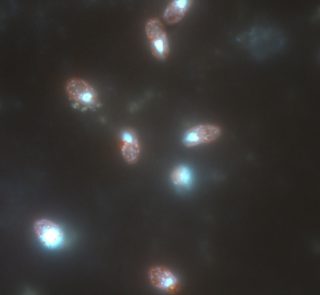
INTERACTOMA proposes computational approaches that exploit the co-occurrence of genes with known and unknown function and the environmental co-occurrence of different microbial species to generate hypotheses and prioritize future research objectives with ecological or biotechnological interest, using saline lakes and lakes as model systems. alpines, as well as the microbiome of animal and plant host species along climatic and geographic gradients.
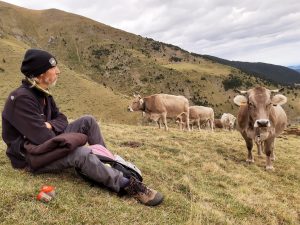
The project will use a socioecological conceptual framework, which will comprehensively evaluate the influence that livestock management dynamics have on herbaceous plant and butterfly communities, which are excellent bioindicators of the conservation status of mountain ecosystems.
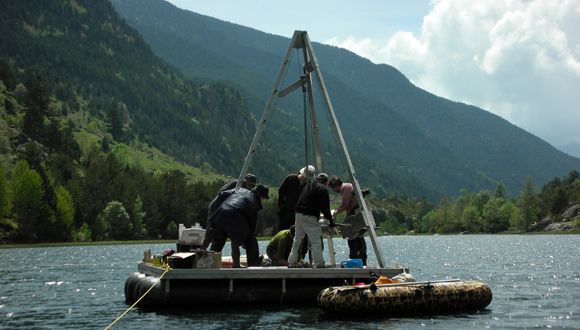
This work focuses on addressing our general hypothesis that local diatom communities respond to the direct and watershed-mediated effects of the current increase in atmospheric CO2, providing insight into small-scale alkalinity generation mechanisms.
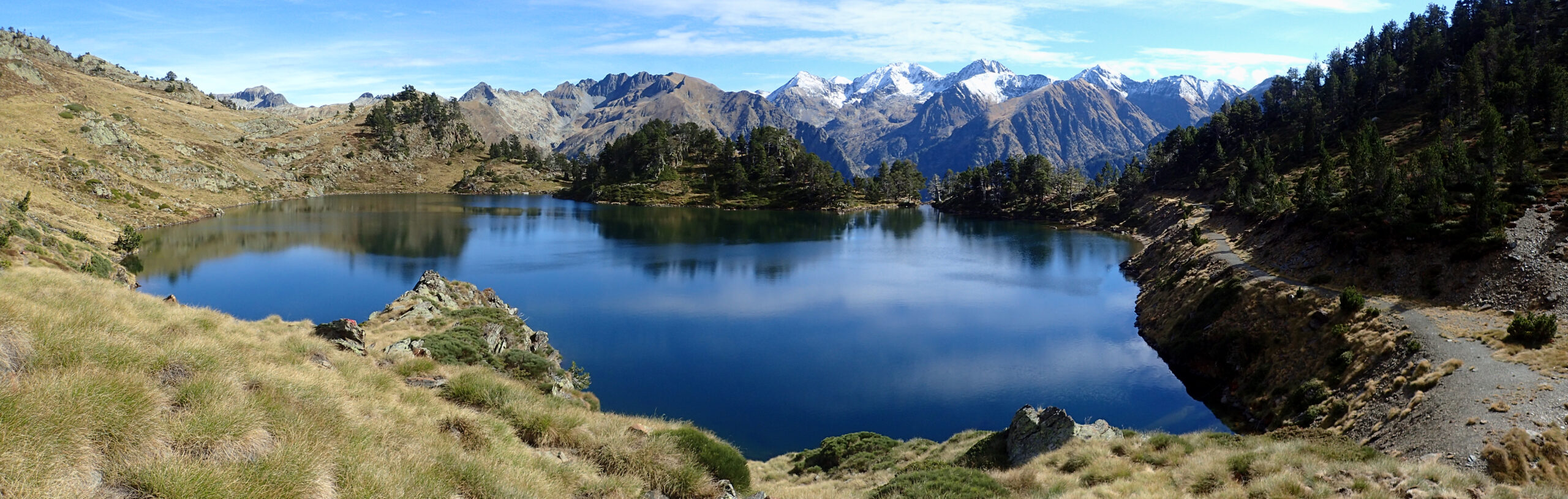
The threats to mountain aquatic ecosystems are multiple. It has been identified that the population of fish in lakes where it did not naturally exist is one of them and is particularly harmful to water quality and biodiversity.


