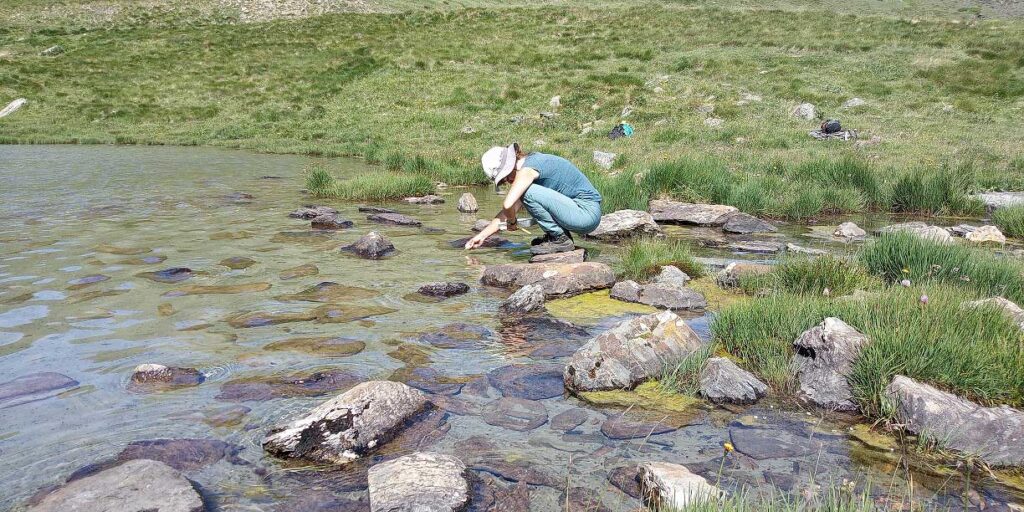
High-mountain lakes represent exceptional ecosystems for monitoring global change. Despite the absence of obvious signs of eutrophication, an increase in littoral algae has been observed in mountain lakes worldwide. In the Pyrenees, a rise in the proportion of cyanobacteria in the biofilms along lake shores has been detected, although their impact on the lakes of the National Parks Network in mountain areas is not yet fully understood.
This project aims to determine whether cyanobacterial proliferation is a common phenomenon in these lakes, identify their composition, and examine the environmental factors that may influence their development. To this end, the composition of cyanobacterial communities will be compared using 16S rRNA gene sequencing in samples collected in 2011 and in the present day across more than a hundred lakes in the network.
Additionally, in situ experiments will be conducted to study in detail the proliferation of cyanobacteria during the ice-free period in model lakes. High-resolution sequencing methods (NANOPORE) will be used to detect the presence of toxin-producing species that may pose a health risk. Special attention will be given to causal variables that could trigger abrupt changes in these ecosystems.
The ultimate goal is to assess the consequences and risks of cyanobacterial proliferation for the conservation of these characteristic mountain park systems, as well as to establish practical monitoring and management methods for park personnel.
IP – Marisol Felip Benach (UB, CREAF)
Other participants:
Lluís Camarero (CEAB-CSIC)
Jordi Catalan Aguilà (CREAF-CSIC)
Arnald Marcer Batlle (CREAF)