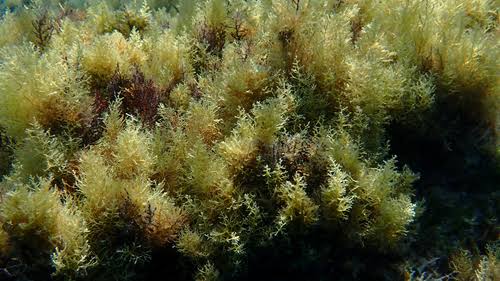
The Macroalgal Forests initiative will begin with the restoration of populations of this species in Addaia Bay, within the S’Albufera des Grau Natural Park. One of the objectives is to develop methodologies and tools that can be replicated in other parts of the Mediterranean and along the rest of the Spanish coastline. The project forms part of Redeia’s Marine Forest platform, which promotes the conservation of marine ecosystems and environmental education through collaboration between public authorities, businesses and scientific institutions.
Redeia, the Centre for Advanced Studies of Blanes (CEAB-CSIC) and the Menorcan Institute of Studies (IME) presented the joint initiative Macroalgal Forests, a macroalgae restoration project aimed at developing new research lines, methodologies and monitoring tools to recover populations of these species, which have declined both in the Mediterranean and in other areas of the Spanish coastline, including the Cantabrian and Atlantic coasts.
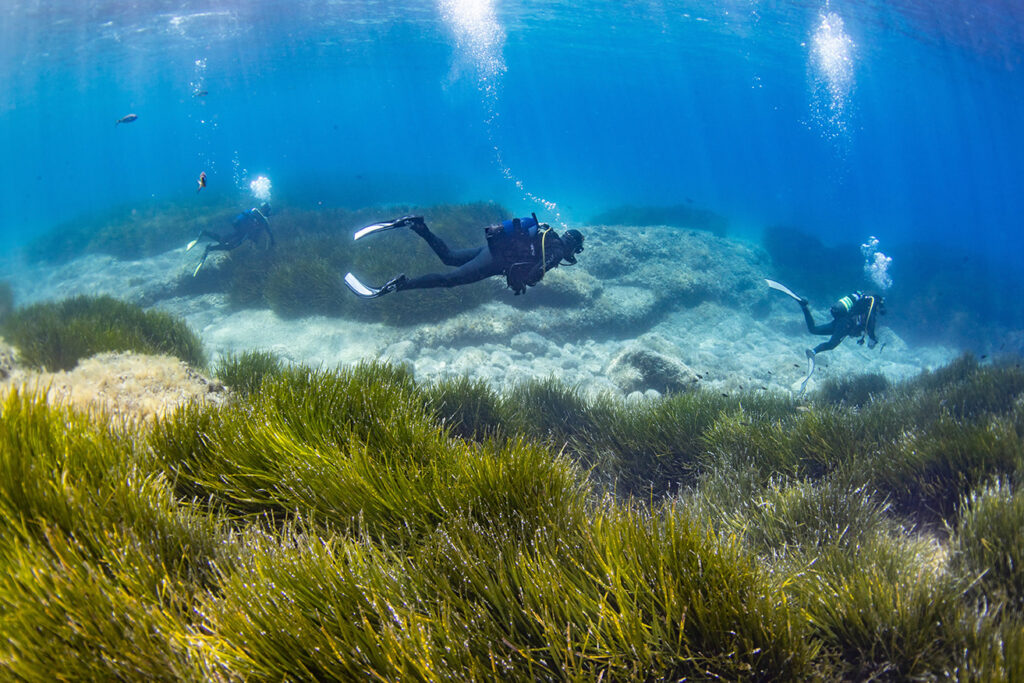
The objective of this project, which is being carried out within the framework of Redeia’s Marine Forest platform, is to consolidate an initial restoration experience involving colonies of Cystoseira balearica in Addaia Bay, within the S’Albufera des Grau Natural Park in Menorca, while also establishing a robust scientific basis to support broader macroalgae conservation actions. These species are capable of creating highly biodiverse habitats that are essential to marine ecosystems. However, their populations are currently threatened by human activity, climate change and grazing pressure from herbivorous species such as the common sea urchin (Paracentrotus lividus).
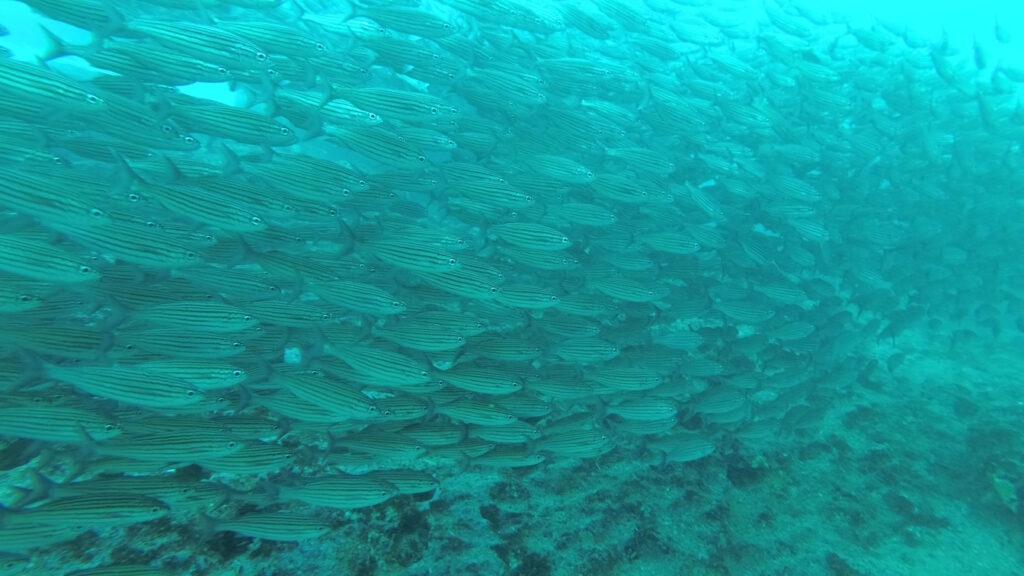
The first action under this project—which begins in the Mediterranean with the Balearic Islands and the Catalan coast as its main focal areas—will take place in Addaia Bay, where a significant loss of Cystoseira balearica forests has already been identified. This decline is due to overgrazing caused by the overabundance of the common sea urchin (Paracentrotus lividus), which feeds on these macroalgae. This phenomenon is occurring throughout the Mediterranean as a result of insufficient control of sea urchin populations by their natural predators (fish belonging to the wrasse and seabream families), which have themselves been affected by overfishing.
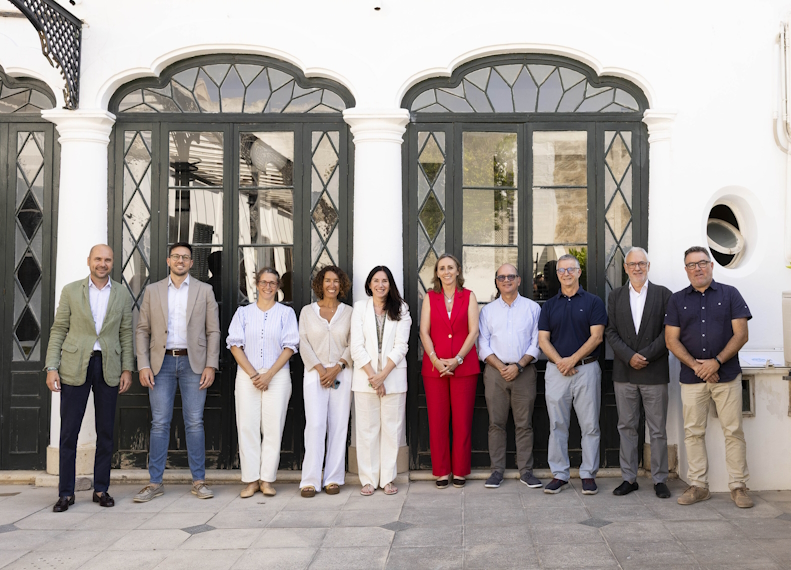
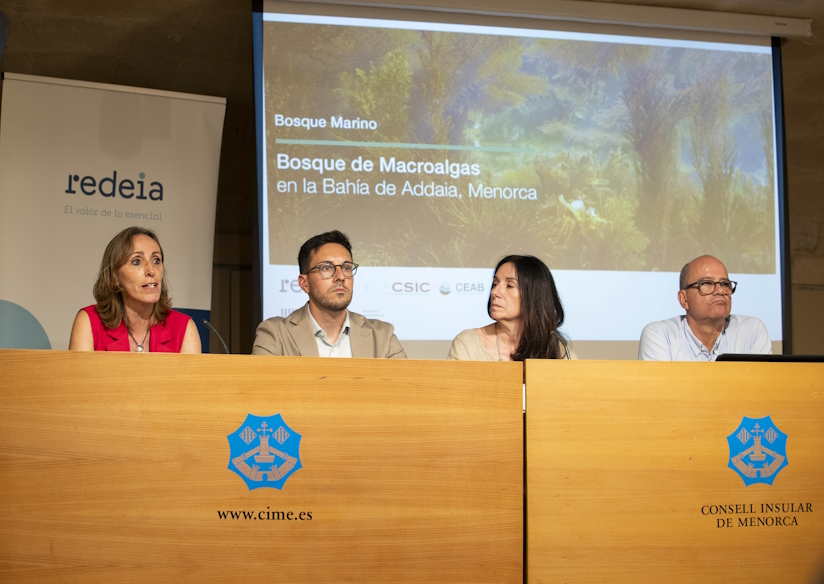
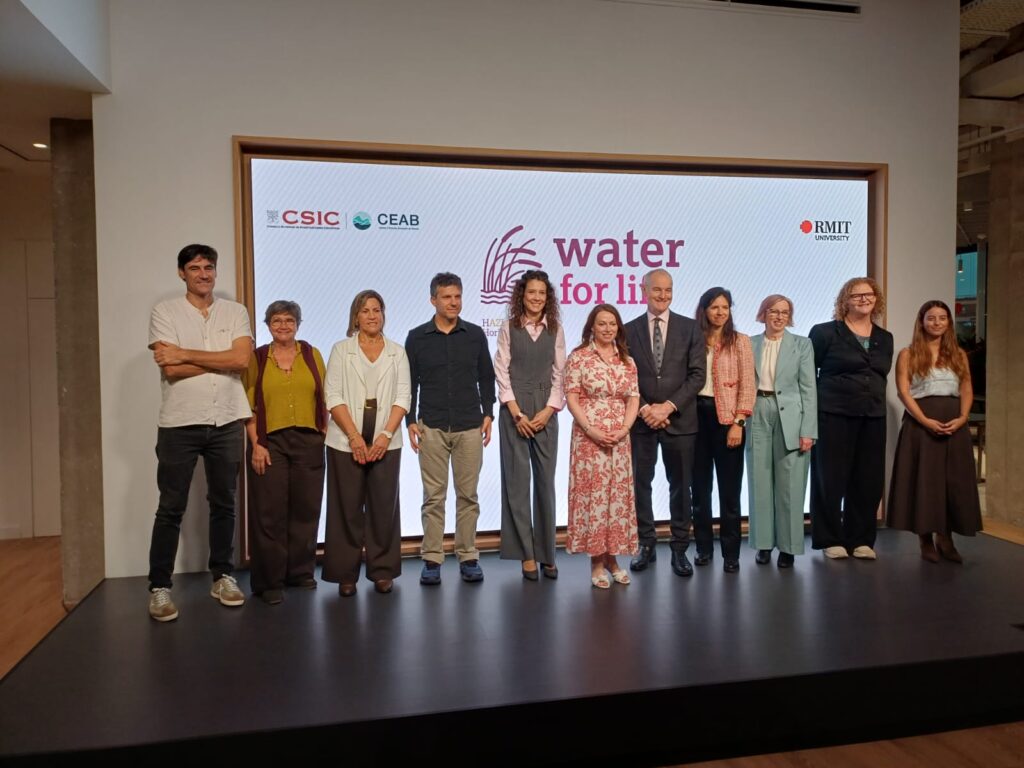
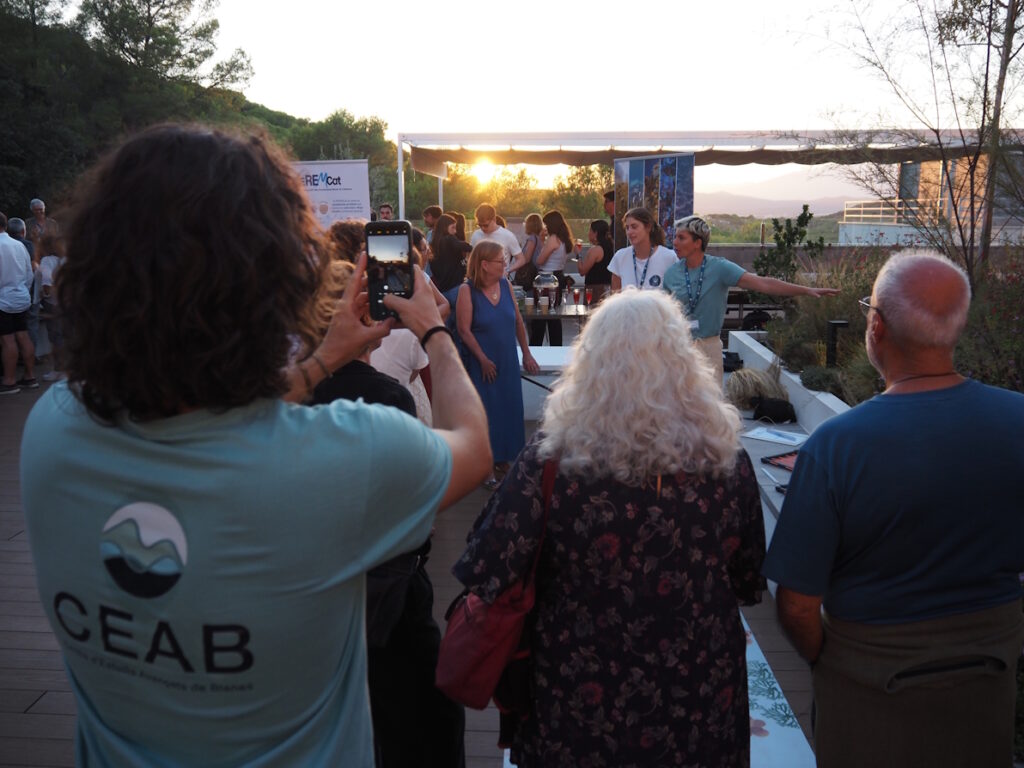
The project was presented at the headquarters of the Menorca Socio-environmental Observatory (OBSAM). Participants included José Simón Gornés, Councillor for the Environment, Biosphere Reserve and Cooperation of the Island Council of Menorca; Joan Palliser, Mayor of Es Mercadal; Ana Torres, Director General for the Natural Environment of the Government of the Balearic Islands; Joan Pons, President of the IME; Eva Pagán, Redeia’s Corporate Director for Sustainability and Studies; and Laura Quintana, Director of Sustainable Development.
In her address, Laura Quintana highlighted that, through this initiative, Redeia’s Marine Forest platform “takes a further step towards the conservation of marine ecosystems. This strategic alliance with two of Spain’s leading scientific institutions in marine research will help us better understand how to protect and restore this key ocean species, while multiplying the positive impact across the marine environment as a whole.”
Representing the Centre for Advanced Studies of Blanes (CEAB-CSIC), the project’s principal investigator, Emma Cebrian, stressed the importance of underpinning conservation efforts with a strong and innovative scientific foundation: “Small-scale restoration is no longer sufficient given the pace of degradation in the Mediterranean. With this project, we are taking a qualitative leap forward by combining restoration through herbivore control with cutting-edge technologies. Our goal at CEAB is to validate efficient methodologies, define accurate biodiversity indicators and develop technological tools that will enable us to move from pilot projects to larger-scale recovery efforts that are both ecologically and economically viable.”
Eva Marsinyach, technician at the Menorca Socio-environmental Observatory (OBSAM), also emphasised that “the projects carried out in Menorca over recent years have expanded our knowledge of macroalgal forests and their conservation status. This new project represents a further step towards consolidating this line of work, addressing new scientific challenges and advancing the development of tools that contribute to their recovery and management.”
Project implementation
The intervention in Addaia Bay will be structured around three components: assessment of herbivore populations (particularly sea urchins), herbivore control, and the identification and monitoring of recovery indicators to evaluate the success of the intervention.
To advance the restoration process, the most suitable sites for sea urchin control measures will be identified. The aim is to promote the natural recovery of the macroalgal beds.
In addition, the area will be monitored to provide accurate estimates of the initiative’s success indicators. Project progress will be tracked using a range of technological tools, including scheduled drone flights, Sentinel satellite imagery, artificial intelligence models, photogrammetry, 3D reconstruction and underwater surveys. These methods will make it possible to determine success indicators with precision and assess ecosystem recovery. All of this will contribute to establishing a solid scientific basis for implementing more efficient, sustainable and scalable conservation solutions.