Skip to content

Biological invasions across time and space: comparing invasion phases in different aquatic ecosystems

Aquatic non-native species are spreading globally due to human activity, yet little is known about how these invasions occur and evolve. This pioneering project uses environmental DNA (eDNA) to study the phases of biological invasion in various aquatic ecosystems, aiming to better understand these processes and provide tools to tackle the biodiversity crisis.

Currently, non-native species (NNS) are moving at an accelerated rate due to human activity, often becoming invasive and having major ecological impacts. Despite recent advances in techniques such as genomics and high-performance computing, we still lack knowledge about the key ecological and evolutionary processes that drive these invasions — particularly in aquatic environments, where taxonomy and introduction routes remain largely unknown. This project addresses that gap by simultaneously studying a large number of aquatic NNS using water and sediment samples analyzed with environmental DNA metabarcoding techniques.

The main goal is to reconstruct the phases of biological invasion (introduction, establishment, spread, etc.) across a range of aquatic ecosystems, including high mountain lakes, Mediterranean rivers, and coastal marine areas. It aims to understand the temporal and spatial variability of these invasions, as well as the genetic dynamics of NNS and their interactions with native species. To achieve this, molecular databases, advanced bioinformatic analysis, and unsequenced samples from CEAB collections will be combined.

The project aligns with the CEAB’s strategic “Aquatic Biodiversity” axis and promotes cross-disciplinary, collaborative research. Its results will help develop new tools to better understand and manage the current biodiversity crisis, while benefiting both internal and external researchers. Additionally, the project will optimize methodologies for large-scale aquatic ecosystem studies and contribute to global knowledge on biological invasions.
General project information

Project code

OTR12776

Financing amount

327764.86€

Development period
Start

20/11/2024

End

19/12/2028

Research areas and themes

Responsible researcher

Deputy technical Director | Senior Scientist

Other researchers and involved staff

Funding entities

Institutions/collaborators

Social networks of the project

You may also be interested in

By combining satellite images, remote sensors, and field data, the project will provide effective tools to help managers and policymakers monitor and assess coastal carbon ecosystems and integrate blue carbon into national climate inventories and policies.
The Network's main objective is to foster collaboration between national and international research groups to advise society and authorities on the key role of BCEs.
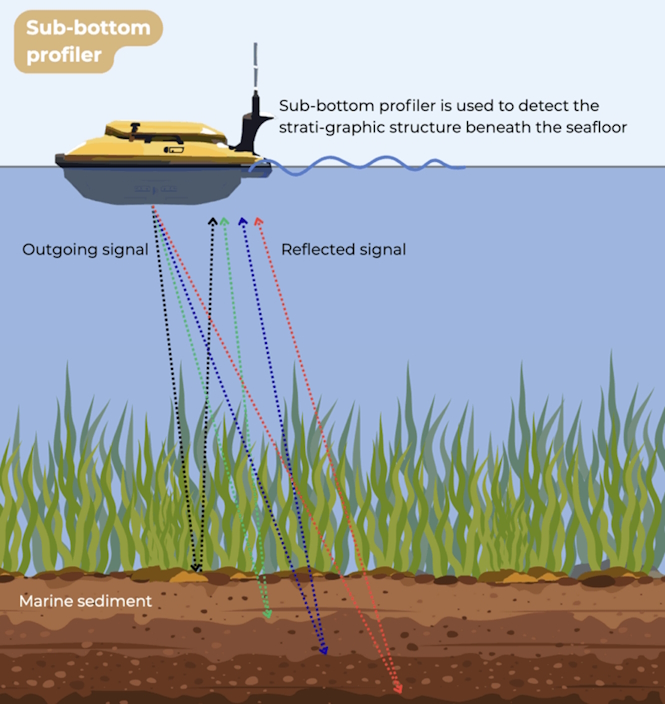
It proposes to develop an innovative and non-destructive method to quantify carbon stocks. This method will use advanced technologies such as geoacoustics, autonomous vehicles, drones, satellite imagery and artificial intelligence, also allowing the exploration of “hidden” carbon deposits under layers of sediment, which have so far been ignored.
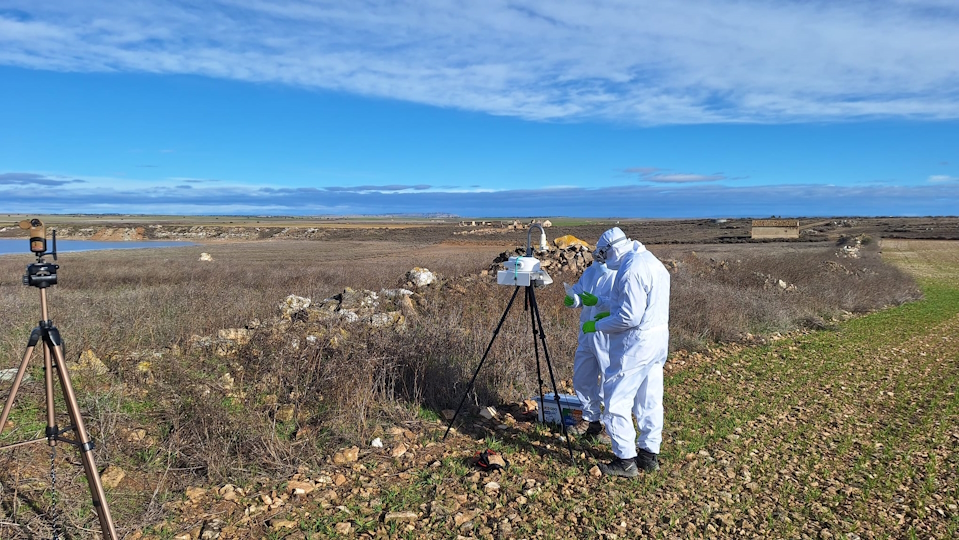
Aims to explore how regional topography and local changes in land and water use scale up to intercontinental dispersion, using metagenomics tools, high-performance computing, real-time satellite data monitoring, and atmospheric modeling.
By studying the relationship between rivers, aquifers, and terrestrial environments, ENEO3 examines how natural self-purification processes can help improve water quality. The project focuses on denitrification, a key biogeochemical process that converts nitrates into nitrogen gas, thereby reducing water pollution caused by excess nitrogen.