Skip to content

ESA-European Coastal Blue Carbon

ESA

By combining satellite images, remote sensors, and field data, the project will provide effective tools to help managers and policymakers monitor and assess coastal carbon ecosystems and integrate blue carbon into national climate inventories and policies.

To support the effectiveness of policies aimed at conserving and restoring coastal blue carbon (CB) ecosystems in the face of imminent climate change threats, there is an urgent need for greater knowledge and tools capable of accurately estimating and monitoring changes in CB carbon stocks across large areas and over time.

By combining satellite images, remote sensors, and field data, the project will provide effective tools to help managers and policymakers monitor and assess coastal carbon ecosystems and integrate blue carbon into national climate inventories and policies.

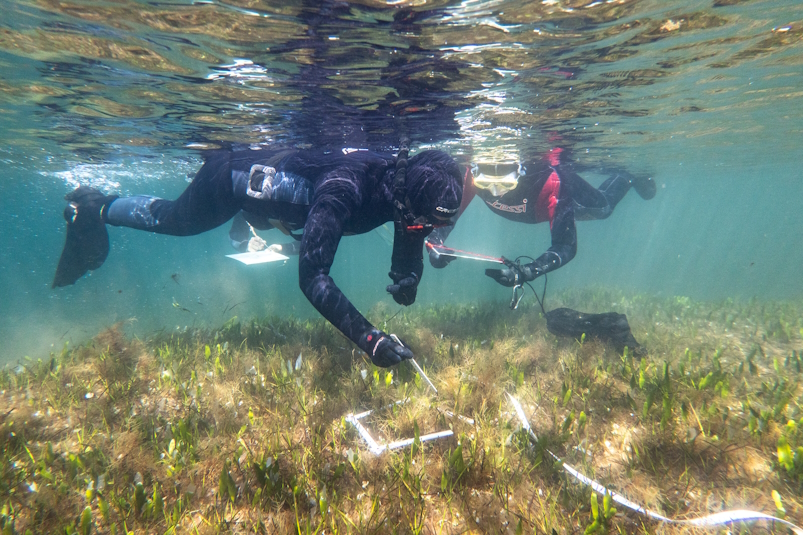
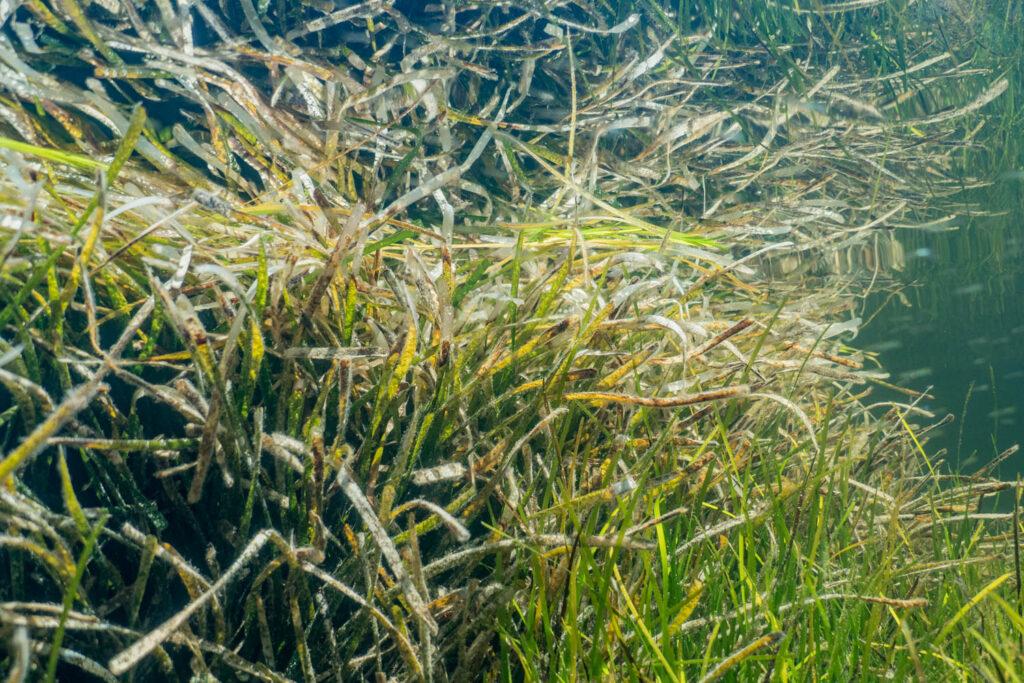
The GAME group is collaborating on this European Space Agency (ESA) project by contributing published and unpublished datasets on biomass, soil blue carbon stocks, and accumulation rates in seagrass meadows and tidal marshes in Spain and France.
General project information

Development period
Start

2024

End

2027

Department

Responsible researcher

Ramón y Cajal Researcher

Funding entities

Institutions/collaborators

Social networks of the project

You may also be interested in

The Network's main objective is to foster collaboration between national and international research groups to advise society and authorities on the key role of BCEs.
It proposes to develop an innovative and non-destructive method to quantify carbon stocks. This method will use advanced technologies such as geoacoustics, autonomous vehicles, drones, satellite imagery and artificial intelligence, also allowing the exploration of “hidden” carbon deposits under layers of sediment, which have so far been ignored.
Aims to explore how regional topography and local changes in land and water use scale up to intercontinental dispersion, using metagenomics tools, high-performance computing, real-time satellite data monitoring, and atmospheric modeling.
By studying the relationship between rivers, aquifers, and terrestrial environments, ENEO3 examines how natural self-purification processes can help improve water quality. The project focuses on denitrification, a key biogeochemical process that converts nitrates into nitrogen gas, thereby reducing water pollution caused by excess nitrogen.
The BlauCat project aims to assess the current status of blue carbon in Catalonia’s coastal ecosystems and contribute to the development of an action plan for their conservation and restoration, as a tool to support public policies for climate change mitigation and adaptation. The project will generate a homogeneous and georeferenced database on blue carbon stocks and fluxes at the regional scale, as well as an analysis of the restoration potential of these ecosystems.