Skip to content

Study, conservation and sustainable management of Posidonia oceanica seagrass meadows (BLUESTOCK)

BLUESTOCK

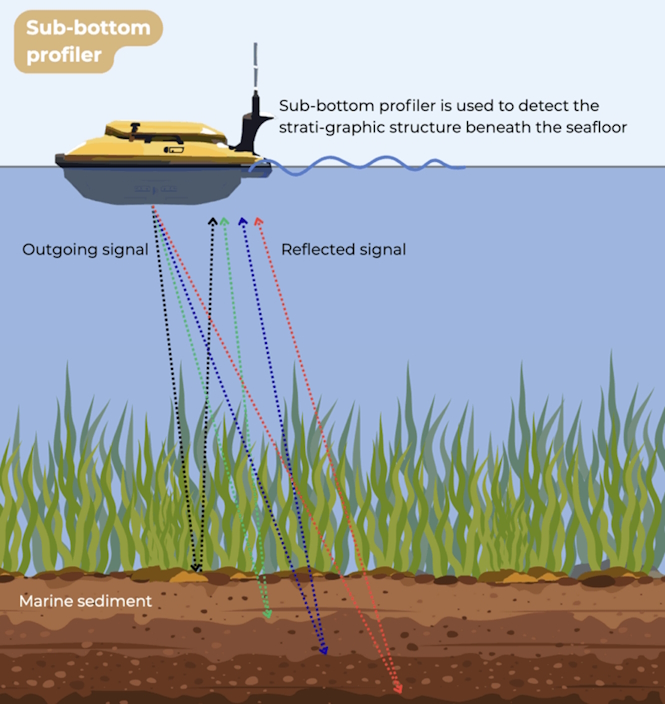
It proposes to develop an innovative and non-destructive method to quantify carbon stocks. This method will use advanced technologies such as geoacoustics, autonomous vehicles, drones, satellite imagery and artificial intelligence, also allowing the exploration of “hidden” carbon deposits under layers of sediment, which have so far been ignored.

Advances the conservation and carbon valuation of Posidonia oceanica meadows through innovative monitoring, mapping, and carbon assessment technologies. Combining blue carbon science, geo-acoustics, remote sensing, AI, and eco-moorings, the project develops scalable methodologies and carbon offset solutions to support climate mitigation, ecosystem resilience, and EU environmental policy.

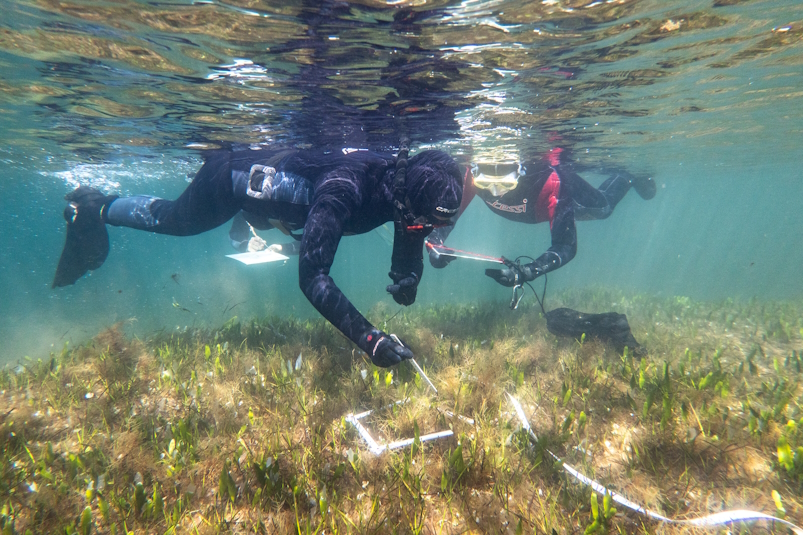
It is an initiative focused on the study, conservation and sustainable management of Posidonia oceanica seagrass meadows in the Bay of Portlligat, Girona. Its main focus is the key role that these ecosystems play as “Blue Carbon” sinks, contributing to mitigating climate change.

The project is based on the premise that the lack of a safe, fast and cost-effective methodology to measure these carbon sinks has led to an underestimation of their global size, thus hindering the development of carbon offset projects.

To solve this, BLUESTOCK proposes to develop an innovative and non-destructive method to quantify carbon stocks. This method will use advanced technologies such as geoacoustics, autonomous vehicles, drones, satellite images and artificial intelligence, also allowing the exploration of “hidden” carbon deposits under layers of sediment, which have so far been ignored.

The main objectives are:

  • To assess long-term changes and factors affecting grasslands.
  • To quantify spatial and temporal variations in carbon stocks in sediments.
  • To develop a new non-invasive methodology to monitor these stocks.
  • To develop a carbon offset project based on the installation of ecological or low-impact moorings to avoid CO2 emissions caused by seabed erosion.
General project information

Financing amount

140.000€

Development period
Start

2025

End

2029

Department

Responsible researcher

Senior Scientist

Other researchers and involved staff

Funding entities

Institutions/collaborators

Social networks of the project

You may also be interested in

Cross-border project to detect and monitor non-indigenous marine species in Catalonia and Occitanie, enhancing scientific cooperation, citizen participation, and management of impacts on ecosystems and coastal economies.
DryingLake addresses the problem of inland water desiccation, which is increasingly affecting ecosystems worldwide due to both climate change and the diversion of water for irrigation.
By combining satellite images, remote sensors, and field data, the project will provide effective tools to help managers and policymakers monitor and assess coastal carbon ecosystems and integrate blue carbon into national climate inventories and policies.
The Network's main objective is to foster collaboration between national and international research groups to advise society and authorities on the key role of BCEs.
Aims to explore how regional topography and local changes in land and water use scale up to intercontinental dispersion, using metagenomics tools, high-performance computing, real-time satellite data monitoring, and atmospheric modeling.