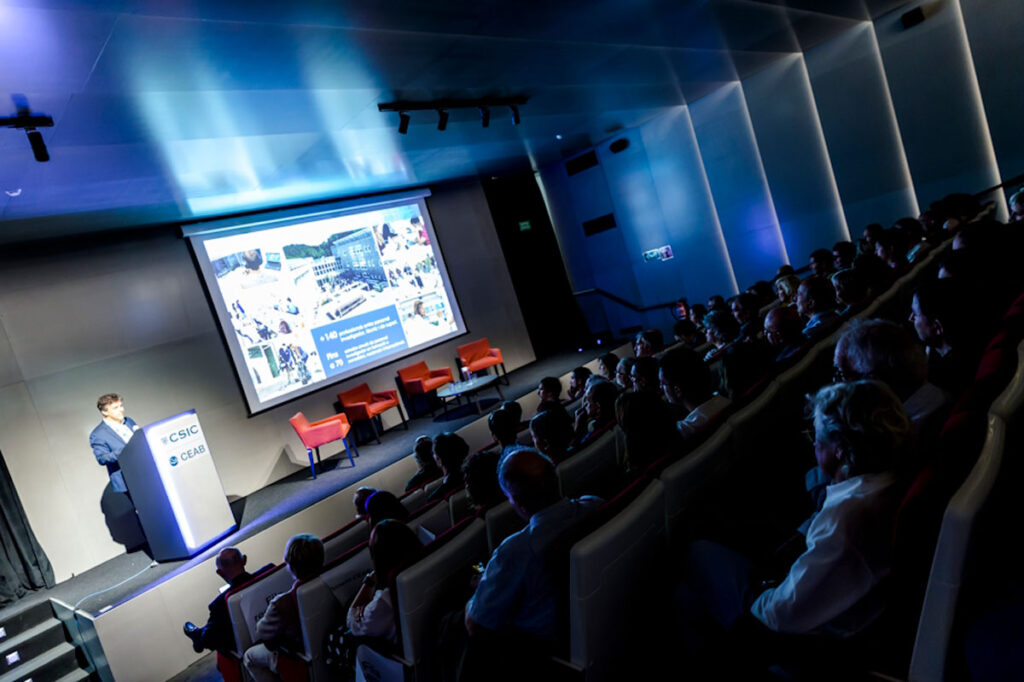
El Centro de Estudios Avanzados de Blanes (CEAB-CSIC) vuelve a reunir a estudiantes de doctorado de todos los ámbitos de la investigación ecológica en la 4ª edición del ΣPhD Ecological Symposium, que se celebrará los próximos 1 y 2 de octubre en la sede del centro.
El simposio —una iniciativa del CEAB que se lleva a cabo cada dos años— tiene como objetivo consolidarse como un encuentro periódico para doctorandos en el amplio ámbito de la ecología. Está abierto a doctorandas y doctorandos de cualquier universidad o centro de investigación. Representa una excelente oportunidad para compartir su investigación científica y recibir comentarios valiosos tanto sobre su contenido como sobre sus habilidades de comunicación científica. El evento es también un espacio idóneo para establecer contactos e interactuar con otros estudiantes, así como con personal investigador.
Esta cuarta edición contará con la participación de tres ecólogos de prestigio —Marta Coll (Institut de Ciències del Mar-CSIC), Volker Grimm (Helmholtz Centre for Environmental Research – UFZ, Alemania) y Graciela Gil-Romera (Instituto Pirenaico de Ecologia, IPE-CSIC)— que actuarán como evaluadores de las presentaciones orales e impartirán ponencias plenarias en un ambiente distendido y constructivo.
Fechas importantes
- 1 de abril: Apertura del envío de abstracts e inscripción
- 15 de junio: Fecha límite para abstracts e inscripción
- 30 de junio: Comunicación de las presentaciones seleccionadas
- 1–2 de octubre: Celebración del simposio
Detalles del simposio
-Inscripción
Es gratuita e incluye las pausas café y la comida del primer día. Debe enviarse un correo electrónico a theephd@ceab.csic.es indicando nombre, posición (estudiante o investigador/a) y afiliación, así como la intención de presentar una comunicación oral (solo para doctorandos). Si finalmente no podéis asistir, os rogamos que nos lo comuniquéis con antelación. Estudiantes y personal investigador deben inscribirse para asistir al evento, tanto si desean participar con una presentación como si prevén asistir como público.
-Envío de abstracts
Pueden participar estudiantes que no hayan depositado aún su tesis doctoral o que lo hayan hecho recientemente. El abstract debe enviarse a theephd@ceab.csic.es (preferiblemente en formato PDF), incluyendo: título, nombre y afiliación, resumen (máximo 300 palabras), año en el que se encuentra el doctorado. El comité científico seleccionará 12 abstracts para presentación oral.
-Presentaciones orales
Las presentaciones tendrán una duración de 15 minutos + 10 minutos de preguntas y feedback por parte de los evaluadores. Se ruega ajustarse estrictamente al tiempo, ya que será un criterio de evaluación. Otros criterios serán: organización de la presentación y objetivos del estudio, contenido científico (marco conceptual y conclusiones, voz y lenguaje corporal, recursos visuales (claridad, legibilidad y equilibrio entre texto e imágenes)
-Lugar
El simposio tendrá lugar en Blanes. Más información sobre cómo llegar al CEAB en: http://www.ceab.csic.es/en/
-Alojamiento
Blanes dispone de una amplia oferta hotelera a distintos precios. Además, para presupuestos más ajustados y con el objetivo de fomentar la interacción entre estudiantes, el CEAB ofrece alojamiento gratuito en domicilios de personal investigador y estudiantes. Las personas interesadas pueden escribir a theephd@ceab.csic.es.
-Comité científico
Daniel Oro, Meritxell Genovart y Frederic Bartumeus
-Comité organizador
Daniel Oro
-Apoyo a la organización
Área de Promoción de la Investigación del CEAB-CSIC
Recordar que el simposio (presentaciones, preguntas i plenarias) se lleva a cabo en inglés.
Plenary Talks
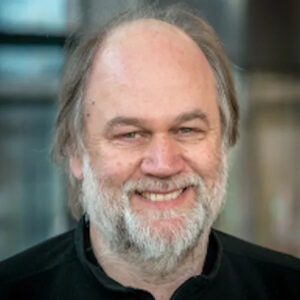 Volker Grimm – Helmholtz Centre for Environmental Reseach – UFZ, Leipzig (Germany)
The integrative honey bee colony model BEEHAVE: lessons learned and to be learned
The mortality rate of honeybee colonies has increased over the last two decades due to the cumulative impact of various stressors, including diseases, pesticides, changes in land use, and beekeeping practices. It is virtually impossible to empirically explore the relative importance of these stressors, as honeybee colonies exhibit trait variation that is orders of magnitude higher than that of most other animal species. Hence, the BEEHAVE model was developed. It represents a single colony and includes a detailed depiction of foraging in agricultural landscapes. Since its release in 2014, BEEHAVE has been used in over 30 studies. In this presentation, I will explain the rationale behind the model, demonstrate how it is used, and summarise what we have learnt from it so far, including its limitations and future developments. Overall, this is an example of ecological modelling for decision support, not via predictions, which are impossible, but via a better understanding of the underlying mechanisms.
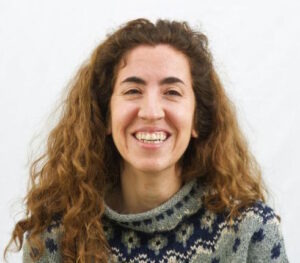 Marta Coll- Institut de Ciències del Mar (ICM-CSIC)
Who Eats Whom—and Why It Matters: Food-Web Models for Understanding Marine Ecosystem Dynamics
Ecosystems are connected by feeding interactions that move energy and matter among species, habitats and regions. These trophic connections influence how ecological communities function and respond to pressures such as fishing, climate change, species invasions and other disturbances. They also underpin ecosystem services and nature’s contributions to people, including food provision, climate regulation, nutrient cycling and cultural benefits. Yet ecosystems are often studied one species, one habitat or one pressure at a time, potentially overlooking indirect effects, feedbacks and ecological surprises.
In this lecture, I will explore how food-web models help us move from observations of individual trophic links to an integrated and dynamic understanding of marine ecosystems. I will introduce complementary approaches for characterizing food webs, from empirical trophic data and qualitative ecological networks to quantitative and spatially explicit marine ecosystem models. I will then show how combining food-web dynamics with species distributions, environmental conditions and human pressures allows us to investigate how change propagates across species, habitats and trophic levels—and how these ecological changes may affect the benefits that people derive from marine ecosystems.
Using scenarios that combine fishing and climate-change pressures with alternative spatial-management options, I will illustrate how these models can reveal ecological interdependencies and trade-offs that remain hidden when species are considered in isolation. They can also support more realistic projections, since trophic interactions may amplify, redistribute or buffer the effects of global change. By linking changes in food-web structure and functioning to ecosystem services and nature’s contributions to people, these approaches can help evaluate the wider ecological and societal consequences of management decisions.
Rather than viewing food webs as static diagrams of “who eats whom,” I will argue that they should be understood as dynamic maps of ecological dependence. I will conclude by discussing what food-web models can and cannot tell us, the importance of data and uncertainty, and the interdisciplinary collaborations needed to better understand, anticipate and manage future marine ecosystems.
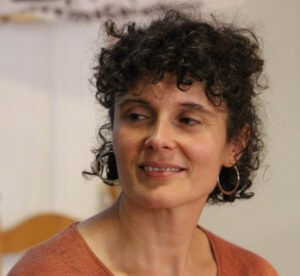 Graciela Gil-Romera- Instituto Pirenaico de Ecología (IPE-CSIC)
Time Continuum: unifying palaeo and neoecology
Global Change is arguably the most transformative process shaping our planet — driven by a single species and potentially irreversible. Estimating its true extent and working towards mitigation demands a broad spatio-temporal perspective, one that only long-term ecological records can provide. My research sits at this intersection: understanding how ecosystems have responded to environmental change over the Quaternary allows us to define baseline conditions and thresholds of resilience against which present and future disturbance can be measured. This is inherently interdisciplinary work, bridging palaeoecology, evolutionary biology, biodiversity science, and modern quantitative ecology.
In this talk, I argue that fully realising this potential requires actively integrating palaeoecological and neoecological approaches, rather than treating them as separate traditions. I illustrate this with our recent work reconstructing 14,000 years of plant community assembly in the Pyrenees and the Bale Mountains (Ethiopia), where we apply Granger causality — a method rooted in modern time-series ecology — to fossil pollen and charcoal records, revealing how fire reorganises predictive relationships among taxa across millennia.
This integrative approach also reflects my commitment to open, collaborative science, embodied in my roles within the European Pollen Database and Neotoma, and in building baselines that can genuinely inform conservation and forecasting in a rapidly changing world.
Programme flow
The complete program of the symposium is now available.
PhD_Definitive Programme flow with invited abstracts + proposed orals 2026