A study published in Marine Pollution Bulletin presents the first joint inventory of carbon stored in seagrass meadows and coastal salt marshes in Spain and Portugal. The findings lead the authors to conclude that conserving these ecosystems should be a priority in climate strategies, both to prevent this carbon from being released back into the atmosphere and to maintain their role as active carbon sinks. The research was promoted by the Spanish Group of Experts on Blue Carbon Ecosystems (G3ECA), a network led by CEAB-CSIC and dedicated to generating and integrating scientific knowledge to support environmental management and climate action.
This is a comprehensive inventory because it accounts for both the carbon retained in the living biomass of these ecosystems—such as leaves and stems—and the carbon stored in sediments. It also integrates estimates for the two main types of coastal blue carbon ecosystems: submerged systems, such as seagrass meadows, and partially inundated systems, such as salt marshes. It is a joint inventory because it includes blue carbon ecosystems along the mainland coasts of Spain and Portugal, as well as those in Spanish island territories.
The study estimates that the 1,976 km² of blue carbon ecosystems analysed retain 95 teragrams (million tonnes) of CO₂ equivalent*, close to one quarter of the combined annual emissions of Spain and Portugal recorded in 2022. The study also estimates that these ecosystems continue to increase their carbon stocks at an average rate of 0.15 teragrams of CO₂ equivalent per year.
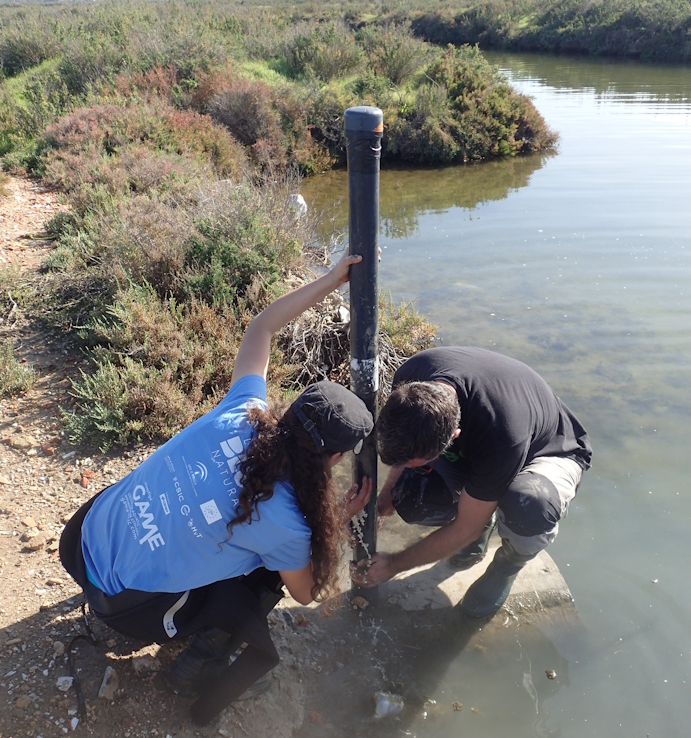
Rather than relying on a single field sampling campaign, the inventory is based on the compilation and analysis of all available scientific information on these ecosystems within the study area, including 60 scientific publications and technical reports, as well as previously unpublished data contributed by the research team. The resulting dataset integrates hundreds of biomass and sediment samples, together with models estimating carbon accumulation over time, making this one of the highest-resolution blue carbon assessments published to date.
The study also shows that carbon storage capacity can be reversed when these habitats are degraded or lost. The research estimates that the loss in the extent of these ecosystems over the past century may have released between 11 and 27 teragrams of CO₂ equivalent. If this degradation continues, the authors project additional emissions of between 1.3 and 5.6 teragrams over the next 30 years. This scenario, they emphasise, reinforces the need to intensify conservation and restoration efforts.
These findings are presented in the scientific article Blue carbon inventories of Spain and Portugal for their inclusion in national climate mitigation strategies. The study is led by Nerea Piñeiro-Juncal, a researcher at the University of Vigo and the Mediterranean Institute for Advanced Studies (IMEDEA, CSIC-UIB), and Miguel Ángel Mateo, from the Blanes Centre for Advanced Studies of the Spanish National Research Council (CEAB-CSIC), and is co-authored by dozens of researchers from Spanish and Portuguese scientific institutions. It was promoted by the Spanish Group of Experts on Blue Carbon Ecosystems (G3ECA), which brings together research groups and specialists in this field to generate and integrate scientific knowledge to guide conservation, public management and climate strategies linked to these ecosystems.
According to the authors, the results reinforce the idea that conserving seagrass meadows, salt marshes and other coastal wetlands is not only crucial for biodiversity and coastal resilience, but also a key tool in tackling climate change: “This work makes it possible, for the first time, to jointly assess the climate role of these ecosystems in Spain and Portugal and highlights the urgency of strengthening their conservation and restoration. It also provides a shared scientific basis for incorporating them into national climate mitigation strategies and for guiding climate action initiatives based on blue carbon,” highlight Nerea Piñeiro-Juncal and Miguel Ángel Mateo, the study’s lead authors.
The researchers stress that conserving these ecosystems and preventing their degradation must be a priority, as this is more effective than restoring them once damaged. They note that destroying these habitats not only means losing their capacity to act as carbon sinks, but also releasing large carbon reserves into the atmosphere.
The key role of Posidonia oceanica in the Mediterranean
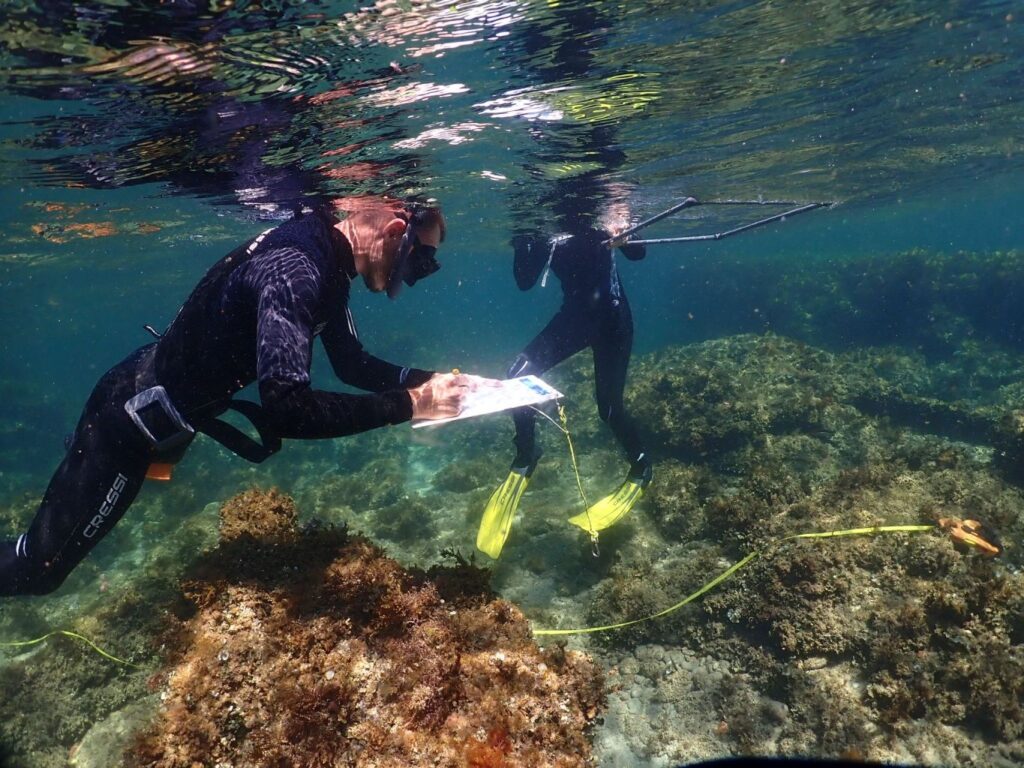
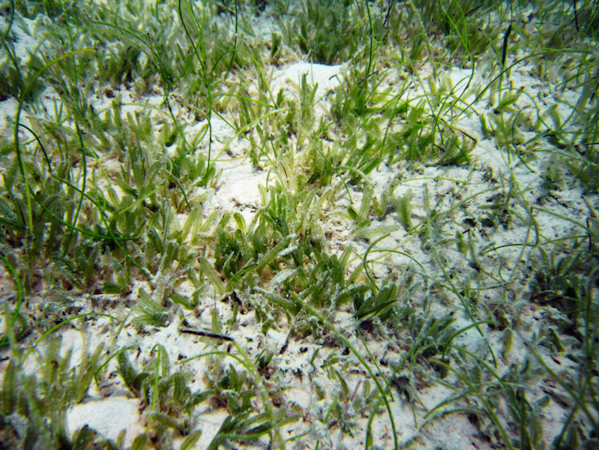
The study confirms that seagrass meadows and salt marshes act as highly efficient carbon sinks, capable of storing large quantities of organic carbon in vegetation and, above all, in sediments. Among the ecosystems studied, Posidonia oceanica meadows, endemic to the Mediterranean Sea, stand out for containing some of the largest carbon reserves in the entire region, owing to their capacity to retain carbon for centuries and even millennia. The degradation of these habitats, whose recovery is difficult and slow, not only releases into the atmosphere part of the carbon accumulated over that time, but also threatens key benefits such as biodiversity conservation and coastal protection.
* These ecosystems capture atmospheric carbon dioxide (CO₂) through photosynthesis and store the carbon in vegetation and sediments. If they are degraded or destroyed, part of this carbon may be released back into the atmosphere as CO₂. For this reason, these quantities are expressed as CO₂ equivalent, the standard unit used to compare them with greenhouse gas emissions.
Ref.: Nerea Piñeiro-Juncal, Oscar Serrano, Carmen B. de los Santos, Nuria Marbà, Elena Díaz-Almela, Fernando Tuya, Inés Mazarrasa, Joxe Mikel Garmendia, Xosé Lois Otero, Karina Inostroza, Jordi F. Pagès, Gonzalo Mendez-Martínez, Emilio Fernandez, Ana I. Sousa, Antonio Camacho, Enric Ballesteros, Carlota Barañano, Fay Belshe, Irene Bernabeu, Fernando G. Brun, Alba Camacho-Santamans, Antonio Delgado, Martin Dahl, Carlos M. Duarte, Fernando Espino, Javier Franco, Maria da Conceiçao Freitas, Jordi Garcia-Orellana, Bernat Garrigos, Enric Gomis, Ricardo Haroun, Ignacio Hernandez, José A. Juanes, Carmen Leiva-Dueñas, Paul Lavery, Ana I. Lillebø, Vera Lopes, Claudia Majtenyi-Hill, Candela Marco-Mendez, Márcio Martins, Briac Monnier, Daniel Morant, Natalia Montero, João M. Neto, Barbara Ondiviela, Gloria Peralta, Antonio Picazo, Gloria Reithmaier, Carlos Rochera, Marta Román, Isaac R. Santos, Rui Santos, Eduard Serrano, Montserrat Soler, Yu Yau Yau, Boris Weitzmann, Imen Zribi, Miguel Ángel Mateo, “Blue carbon inventories of Spain and Portugal for their inclusion in national climate mitigation strategies”, Marine Pollution Bulletin, Volume 228, 2026, 119570, ISSN 0025-326X, https://doi.org/10.1016/j.marpolbul.2026.119570.