Skip to content

Wastewater in High Mountain Areas: Impact on Microbial Communities and Strategies for Its Mitigation (RAMi)

The project aims to design nature-based wastewater treatment solutions specifically adapted to high-mountain conditions.

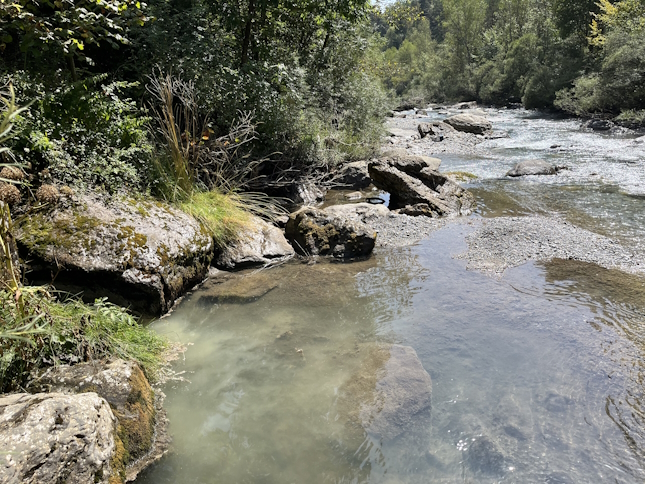
High-altitude alpine headwater rivers are naturally nutrient-poor and experience highly variable flow patterns. Yet, even these remote waters can be affected by wastewater from mountain tourism, such as huts and lodges that lack proper treatment systems. Previous research indicates that such wastewater is rich in nutrients—particularly ammonium nitrogen (NH₄)—which can significantly alter river chemistry (IWAS Project, OAPN 2023–2026).

The first to respond to these chemical changes are the microbial communities in river sediments. These microbes are crucial for nutrient cycling, including nitrogen and phosphorus removal. Changes in their composition, diversity, and activity can ripple through the entire ecosystem. However, we still know little about how these changes happen and how to prevent them—especially in sensitive alpine rivers.
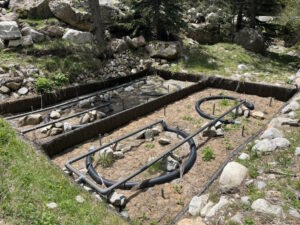
Constructed wetland for wastewater treatment at the Estany Llong refuge, Aiguestortes i Estany de Sant Maurici National Park. Author: Stephanie Merbt.

Current mitigation often relies on septic systems, which are simple and affordable but still release nutrient-rich effluents. To tackle this, RAMi aims to design nature-based wastewater treatment solutions specifically adapted to high-mountain conditions, helping preserve water quality in these fragile environments.

The RAMi Project focuses on two main goals:

1. Understanding Impact: Track how wastewater affects microbial community structure and ecosystem function.
2. Innovative Solutions: Develop effective, environmentally friendly treatment systems suited to alpine conditions.

By combining cutting-edge microbial research with green infrastructure, RAMi seeks to protect alpine rivers and ensure sustainable tourism in high-mountain regions.

(Funding: Proyectos Intramurales Especiales CSIC)

General project information

Financing amount

82.003€

Development period
Start

01/05/2025

End

30/04/2028

Department
Research areas and themes

Responsible researcher

Ph.D. associate FC

Funding entities

Institutions/collaborators

Social networks of the project

You may also be interested in

Cross-border project to detect and monitor non-indigenous marine species in Catalonia and Occitanie, enhancing scientific cooperation, citizen participation, and management of impacts on ecosystems and coastal economies.
DryingLake addresses the problem of inland water desiccation, which is increasingly affecting ecosystems worldwide due to both climate change and the diversion of water for irrigation.
By combining satellite images, remote sensors, and field data, the project will provide effective tools to help managers and policymakers monitor and assess coastal carbon ecosystems and integrate blue carbon into national climate inventories and policies.
The Network's main objective is to foster collaboration between national and international research groups to advise society and authorities on the key role of BCEs.
It proposes to develop an innovative and non-destructive method to quantify carbon stocks. This method will use advanced technologies such as geoacoustics, autonomous vehicles, drones, satellite imagery and artificial intelligence, also allowing the exploration of “hidden” carbon deposits under layers of sediment, which have so far been ignored.