Skip to content

Changes in the flora of the lakes of the Pyrenees (FLORAQUA)

FLORAQUA

floraqua-e.gacia
In 1987, a synoptic study of the ponds of the Pyrenees was carried out that included 35 localities of the PNASM. This reference offers a unique opportunity to evaluate the changes that have occurred since then in submerged plant communities and analyze their causes.

The National Parks have become the epicenter to follow the effects of global change on the country’s natural ecosystems. In this context, mountain ponds are sentinel ecosystems that have allowed us to verify some of the trends in our mountain ranges (e.g., Pyrenees, Sierra Nevada, Picos de Europa, Central System).

Until now, most studies have focused their attention on biogeochemical or microorganism aspects using the few long-term sampling series or the sedimentary record. This project aims to expand the spectrum towards submerged vegetation, whose response may perhaps be slower, but indicative of significant structural changes.

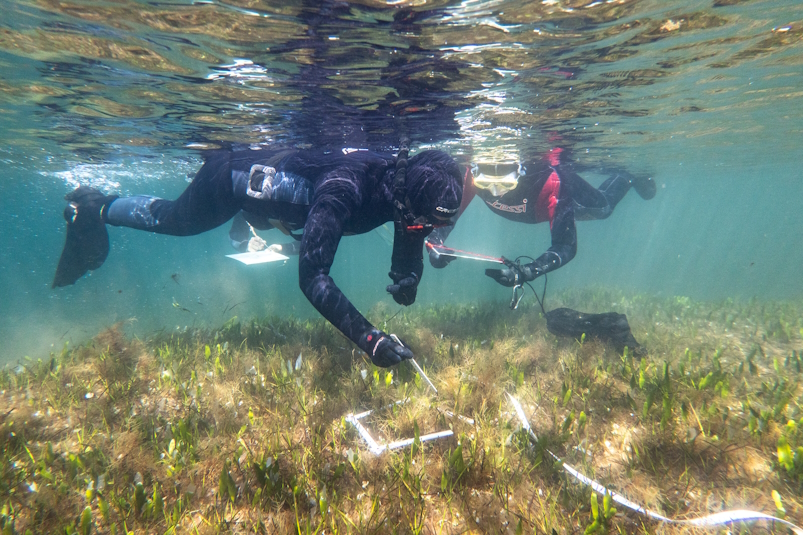
In 1987, a synoptic study of the ponds of the Pyrenees was carried out that included 35 localities of the PNASM. This reference offers a unique opportunity to evaluate the changes that have occurred since then in submerged plant communities and analyze their causes. We propose carrying out new vegetation inventories in the same lakes accompanied by diagnostic elements that allow us to determine the possible factors of change. This will include both water and sediment characteristics, as well as the presence and identity of introduced fish (salmonids and redhead). These are emblematic lakes in terms of the diversity and development of the macrophyte population. In each lake, the same transects will be repeated by immersion, with a detailed semi-quantitative inventory and sample collection for the study of biomass and eutrophication indicators (e.g., epiphyte load, nitrogen and phosphorus content).
General project information

Development period
Start

09/11/2021

End

09/11/2024

Department

Responsible researcher

Tenured Scientist

Other researchers and involved staff

Funding entities

Institutions/collaborators

Social networks of the project

You may also be interested in

Cross-border project to detect and monitor non-indigenous marine species in Catalonia and Occitanie, enhancing scientific cooperation, citizen participation, and management of impacts on ecosystems and coastal economies.
DryingLake addresses the problem of inland water desiccation, which is increasingly affecting ecosystems worldwide due to both climate change and the diversion of water for irrigation.
By combining satellite images, remote sensors, and field data, the project will provide effective tools to help managers and policymakers monitor and assess coastal carbon ecosystems and integrate blue carbon into national climate inventories and policies.
The Network's main objective is to foster collaboration between national and international research groups to advise society and authorities on the key role of BCEs.
It proposes to develop an innovative and non-destructive method to quantify carbon stocks. This method will use advanced technologies such as geoacoustics, autonomous vehicles, drones, satellite imagery and artificial intelligence, also allowing the exploration of “hidden” carbon deposits under layers of sediment, which have so far been ignored.