Skip to content

Monitoring of non-indigenous marine species along the coasts of Occitanie and Catalonia

ALIEN-OCCICAT

Cross-border project to detect and monitor non-indigenous marine species in Catalonia and Occitanie, enhancing scientific cooperation, citizen participation, and management of impacts on ecosystems and coastal economies.

Invasive alien species are one of the main global threats to biodiversity, representing the second leading cause of biodiversity loss after habitat destruction. In the marine ecosystems of the western Mediterranean, particularly along the coasts of Occitanie and Catalonia, these species often remain at low densities before becoming invasive and causing significant ecological and socio-economic impacts.

The ALIEN‑OCCICAT project aims to improve early detection, monitoring, and understanding of the dynamics of non-indigenous marine species in this cross-border region. To achieve this, it combines scientific methodologies such as taxonomic monitoring and environmental DNA analysis with active involvement from natural area managers and citizens.

The project fosters a transboundary cooperation network among researchers, public authorities, stakeholders, and citizens to share data, enhance coordination, and overcome fragmentation of existing initiatives.

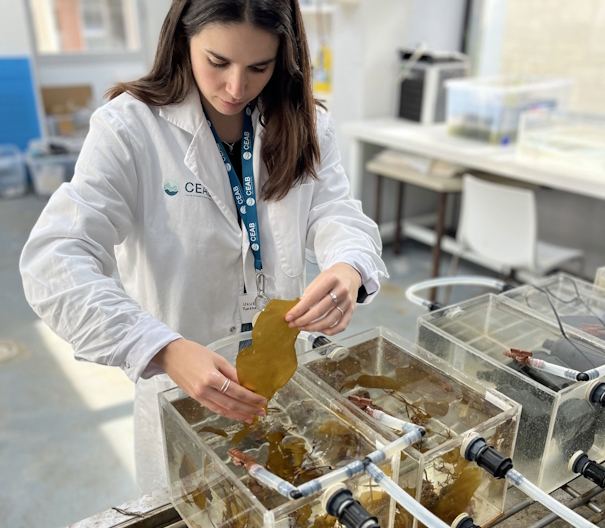
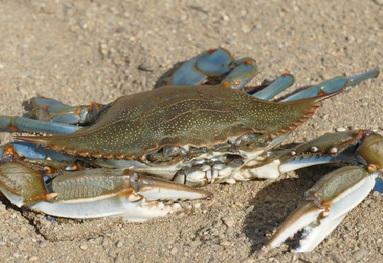
A key case study is the blue crab (Callinectes sapidus), an invasive species that is already disrupting food webs, traditional fisheries, and ecosystem services. CEAB will also focus on the invasive polychaete Alitta succinea, which in various locations has already begun to displace native species, as well as on the creation of 3D models of some of the target species for scientific and outreach purposes.

By improving knowledge of ecological processes, ALIEN‑OCCICAT seeks to anticipate changes in species status, develop effective management strategies, and raise public awareness about biological invasions.

  • Project aligned with EU goals on biodiversity protection and invasive species management.
  • Combines research, environmental management, and citizen engagement.
  • Strong territorial and applied focus with direct relevance for coastal management.
General project information

Project code

EFA149/03

Development period
Start

01/01/2025

End

31/12/2027

Department

Responsible researcher

Research Professor | Head of Marine Ecology Department

Funding entities

feder

Institutions/collaborators

Social networks of the project

You may also be interested in

DryingLake addresses the problem of inland water desiccation, which is increasingly affecting ecosystems worldwide due to both climate change and the diversion of water for irrigation.
By combining satellite images, remote sensors, and field data, the project will provide effective tools to help managers and policymakers monitor and assess coastal carbon ecosystems and integrate blue carbon into national climate inventories and policies.
The Network's main objective is to foster collaboration between national and international research groups to advise society and authorities on the key role of BCEs.
It proposes to develop an innovative and non-destructive method to quantify carbon stocks. This method will use advanced technologies such as geoacoustics, autonomous vehicles, drones, satellite imagery and artificial intelligence, also allowing the exploration of “hidden” carbon deposits under layers of sediment, which have so far been ignored.
Aims to explore how regional topography and local changes in land and water use scale up to intercontinental dispersion, using metagenomics tools, high-performance computing, real-time satellite data monitoring, and atmospheric modeling.