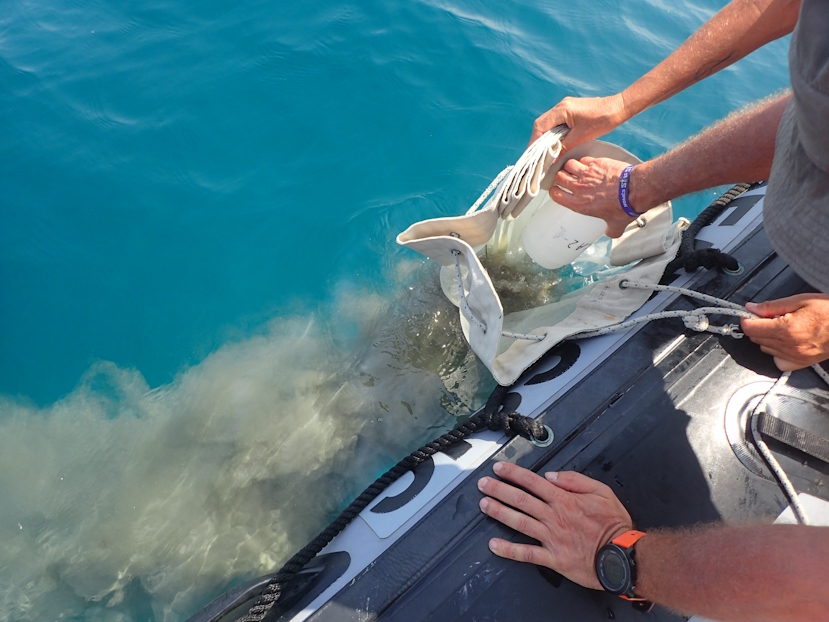
The rapid development of high throughput sequencing techniques is generating revolutionary opportunities for biodiversity research, key examples being the study of environmental DNA (eDNA) and microscopic pathogens. The study of eDNA provides an unparalleled degree of automation and method standardisation for the detection of biodiversity that significantly reduces traditional sampling efforts and taxonomic biases. This facilitates comprehensive detection of the native biodiversity found in marine communities that often interact with non-indigenous species (NIS). The uses of eDNA metabarcoding are far-reaching in management and conservation of marine habitats, and metabarcoding is now a well-established method for marine biodiversity monitoring.
In this project, we will consider both organismal and extra-organismal DNA. Our recent research has shown the versatility of eDNA studies of different aspects of marine biodiversity, from large-scale biogeographic patterns to pathogens detection in aquaculture activities. BlueDNA will focus on understanding zooplankton and meroplankton population dynamics through eDNA-based metabarcoding and metaphylogeography, providing accurate data and reliable tools to assess biodiversity shifts and resilience of these fast-changing, yet still understudied, key marine communities.
Another related task of BlueDNA includes the reconstruction of NIS colonisation histories, which has been traditionally limited by the availability of historical data. As part of a current project, our research team has unravelled several NIS histories (over centuries) from sediment cores. BlueDNA will take a step further and obtain sedimentary ancient eDNA metabarcoding datasets to detect historical patterns of NIS introductions across several estuaries where there are comprehensive historical NIS records.
Finally, BlueDNA will study the dynamics of emerging protist-linked diseases in marine shellfish aquaculture, which pose significant challenges to this important industry. In summary, BlueDNA will leverage novel big community data approaches to thoroughly understand how native biodiversity, pathogens and NIS influence marine communities, and provide guidelines to enhance conservation and sustainable management of marine resources.