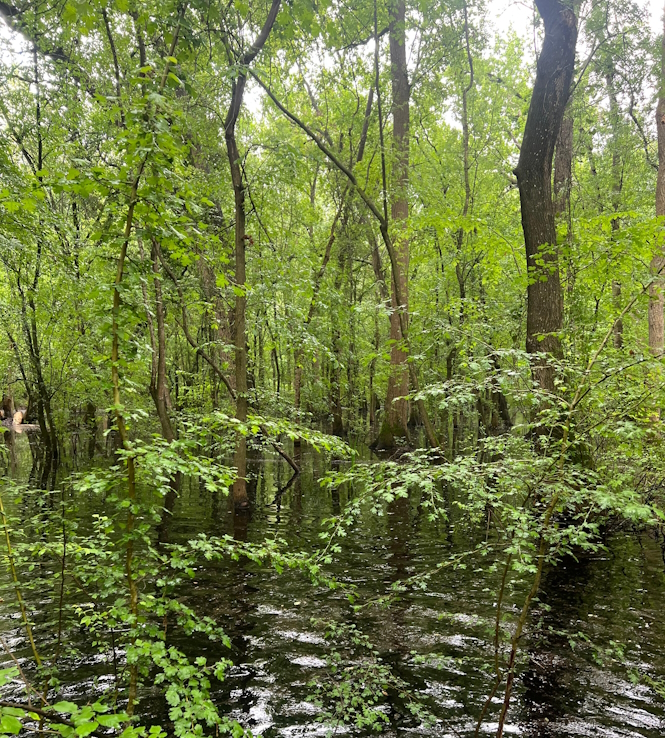
Riparian corridors can help reduce nitrate pollution via denitrification, a microbial process that transforms nitrate into nitrogen (N) gas under anaerobic conditions. These ecosystems, considered powerful green N filters, are used as a mitigation strategy worldwide. However, their N buffering capacity is not warranted in Mediterranean regions where riparian soils show intermediate soil moisture conditions that enhance nitrification over denitrification, and the production of N2O, a powerful greenhouse gas, 300 times more harmful than CO2.
The aim of the RIPAMED project is to assess the role of Mediterranean riparian corridors as green N filters and to identify under which climatic conditions riparian soils act either as sources or sinks of nitrate and N2O. To do so, we have selected 10 riparian plots along La Tordera (Catalonia), a typical Mediterranean river draining 870 km2 of forested and agricultural landscapes. At each plot, we are recording soil moisture and temperature at sub-daily time scales, and measuring soil N cycling seasonally.
Our preliminary results indicate that altitude drives longitudinal changes in environmental variables, especially soil moisture, which tends to decrease from the headwaters to the mouth of the river. We expect this spatial pattern to be accompanied by concomitant changes in net nitrification and denitrification, leading to an increase in nitrate accumulation in the lower parts of the riparian corridor. Our results will contribute to identify where and when Mediterranean riparian corridors emit more N2O and effectively contribute to reduce nitrate pollution. This information will help to prioritize management and conservation practices.